An electric gate motor is the difference between a gate you use and a gate you resent. Ours are supplied as complete kits — operator, control board, remotes and the safety hardware you need to run a powered gate legally in the UK — matched to the weight and width of the leaf they’re driving. Whether you’re automating a new made-to-measure driveway gate or retrofitting a set you already own, the three questions below get you to the right unit in about a minute.
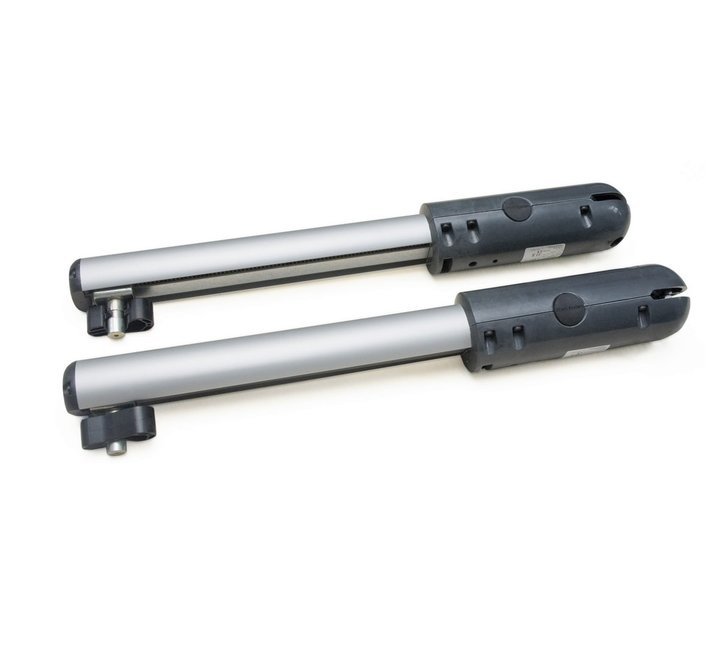
Everything follows from how your gate moves. A swing gate — one leaf or two, hinged on posts — needs an operator per leaf, either a linear ram that pushes the gate open or an articulated arm where the post sits proud of the hinge. A sliding gate runs on a track, and takes a single motor mounted on a concrete plinth beside the opening, driving a toothed rack fixed along the gate. The two are not interchangeable, and no amount of adjustment will make one do the other’s job.
If you have a cantilever gate, treat it as sliding. If you have a folding or bi-fold gate, ring us before you buy — +447716163333 — because these need a specific arm geometry and the wrong choice will bind within a season.
Two numbers matter: the weight of the leaf and its width. Weight determines whether the motor has the torque to move it at all; width determines the leverage it needs at full extension, which is why a light 4-metre leaf can be harder to drive than a heavy 2-metre one.
Every gate we build carries its finished weight on the product page, so if you’re pairing an operator with one of our gates the arithmetic is done for you. If you’re retrofitting, weigh or estimate carefully and err upwards — an operator running permanently at the top of its range is an operator with a short life.
Duty cycle is the other thing worth a thought. A domestic driveway used four times a day asks very little. A shared entrance to six flats, or a yard with deliveries all morning, needs an intensive-use motor. Tell us the traffic and we’ll steer you.
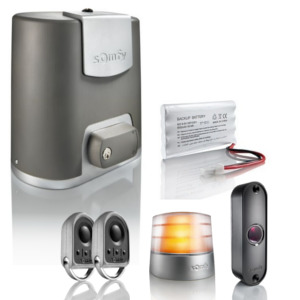
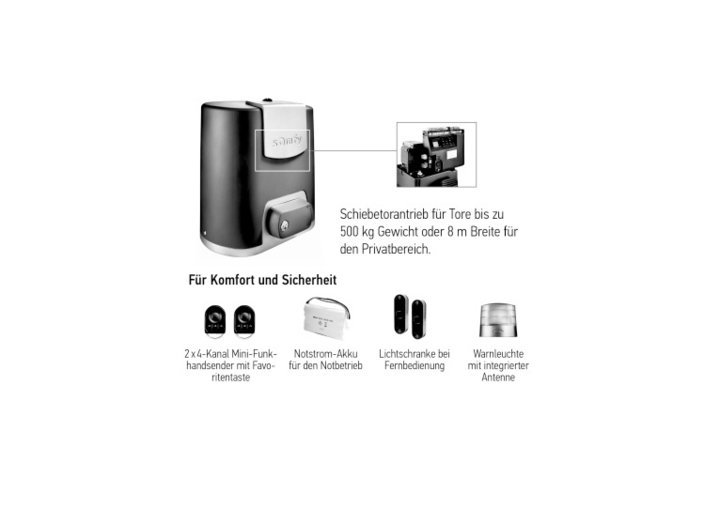
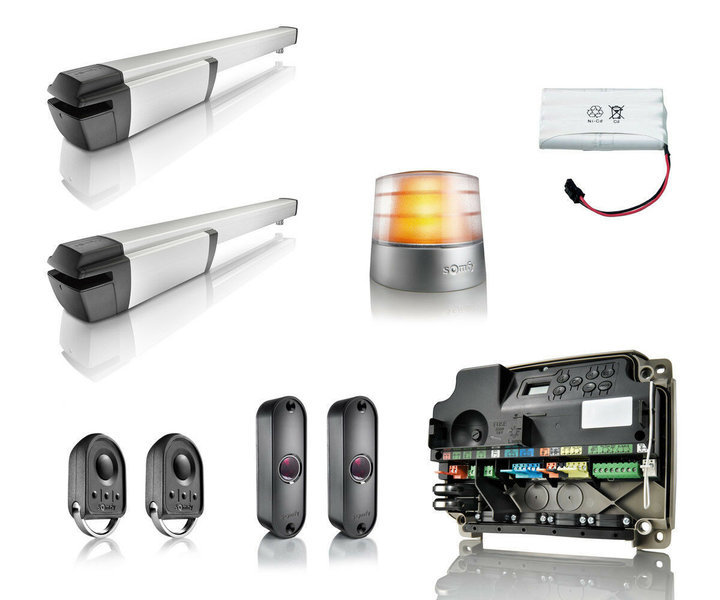
Each kit here arrives with the operator, control unit and two remote handsets as standard. Photocells, a warning beacon, a keypad or intercom entry, and a battery back-up for power cuts are specified separately — you’ll find them under Gate Accessories & Automation Equipment. We’d treat photocells as essential rather than optional, for reasons that follow.
You will also need power at the gate: a fused, weatherproofed supply on its own circuit, run by a qualified electrician. We don’t supply cable or groundwork.
This is the part most sites skip. In the UK a powered gate is legally a machine, and installing one brings duties under the Supply of Machinery (Safety) Regulations. In practice that means a documented risk assessment, force testing against the limits in BS EN 12453, guarding or detection at every crushing and shearing point, and a manual release so the gate can be opened in a power failure. The Door & Hardware Federation’s code of practice for powered gates (TS 013) is the reference installers work to.
None of this is bureaucracy for its own sake. Powered gates have killed children in this country. If you are competent and equipped to test and document the installation, everything you need is on this page. If you are not, have it fitted by a DHF-trained installer —
Automating a gate you already have is usually straightforward, with three caveats. The posts must be sound enough to carry the motor’s reaction load — a swing operator puts far more strain on a post than a hand-opened gate ever will. The hinges must be free; a gate that drags on its arc will trip the motor’s obstruction sensing repeatedly. And the gate must be able to swing or slide clear without fouling a slope, a kerb or a wall. Send us photographs and dimensions and we’ll tell you honestly whether it’s worth doing.
Operator kits on this page run from £499 to £1,225 including VAT, which covers most domestic driveways. Industrial and high-duty specifications are quoted individually.
Not sure which one? Call +447716163333 or send us the gate’s width, weight and how it moves, and we’ll come back with a single recommendation rather than a catalogue.
Can I automate a gate I already own? Usually, yes. The posts need to be strong enough to take the operator’s load, the hinges need to move freely, and the gate needs a clear arc or run. Send photographs and measurements and we’ll confirm before you buy.
Do I need photocells? Treat them as necessary. A powered gate is legally a machine in the UK and must be safe at every crushing and shearing point; photocells are the standard way of achieving that on a domestic installation, alongside force testing to BS EN 12453.
What happens in a power cut? Every operator here has a manual release that lets you open the gate by hand. If you need the gate to keep working through an outage, add a battery back-up.
Swing or sliding — which motor do I need? They’re not interchangeable. Hinged gates need one operator per leaf; track-mounted sliding and cantilever gates need a single rack-driven motor. Choose by how the gate moves, then by leaf weight and width.
Can I fit it myself? Legally you may, but you take on the installer’s duties: risk assessment, force testing, and documentation under the Supply of Machinery (Safety) Regulations.
How many remotes come with it? Two handsets as standard. Additional remotes, keypads and intercom entry are available separately.
No account yet?
Create an Account