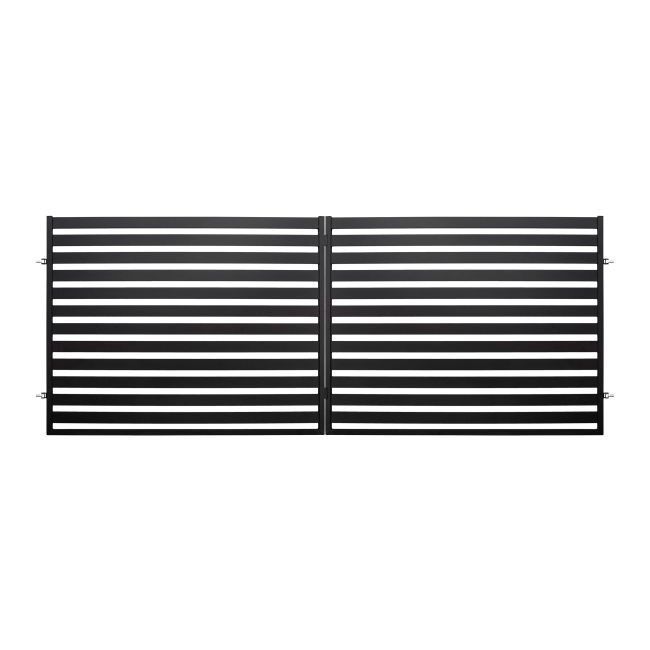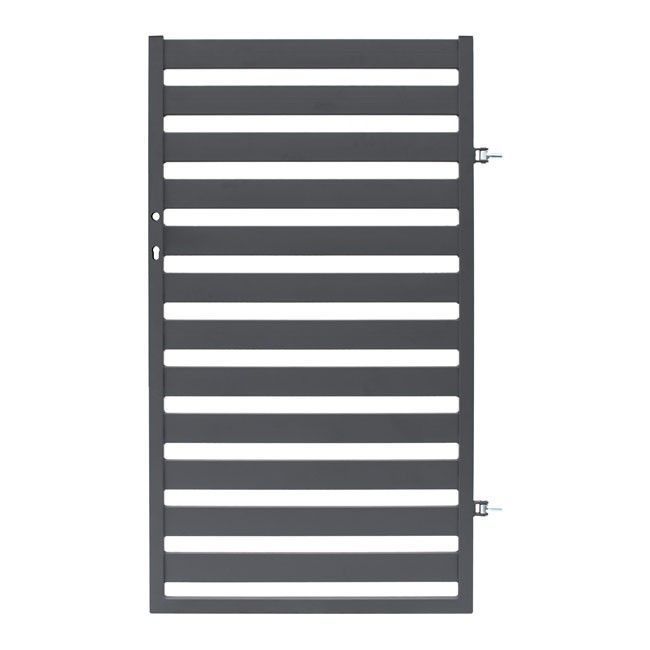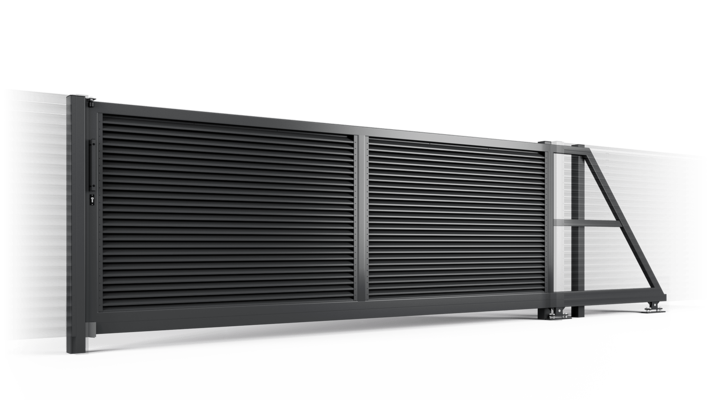
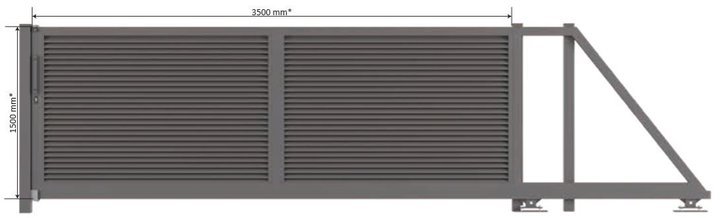
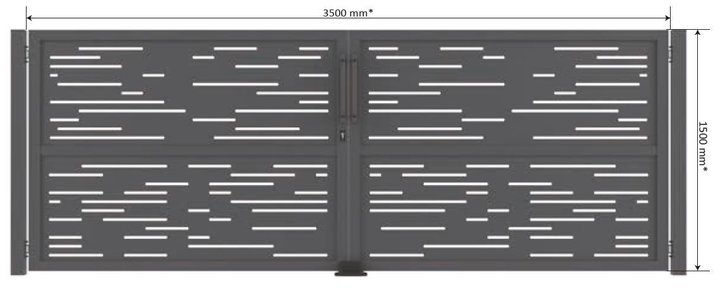
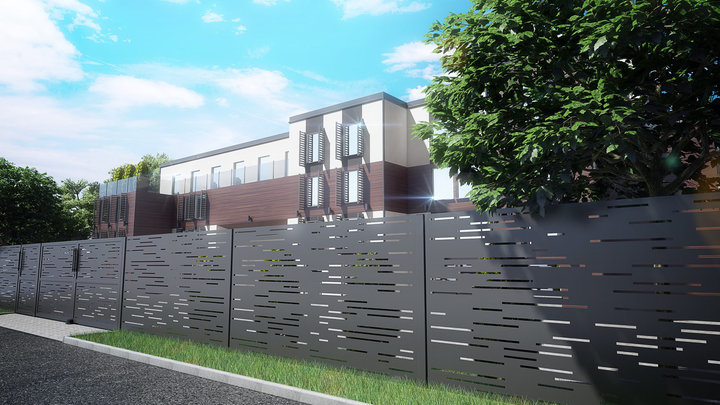
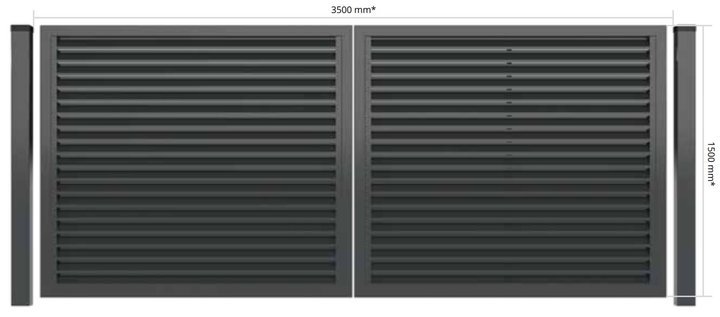
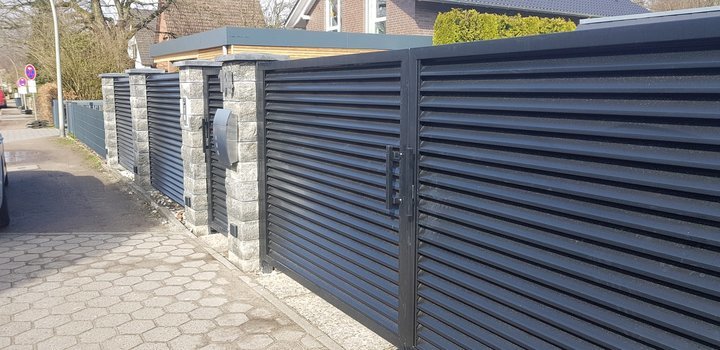
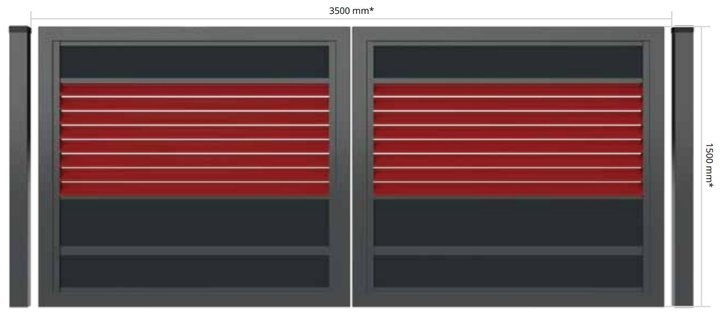
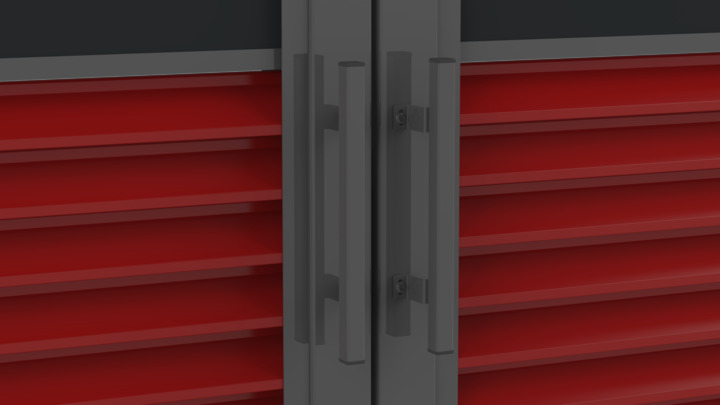
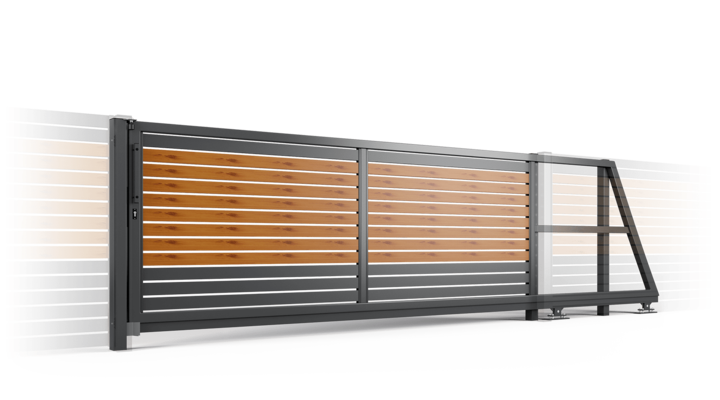
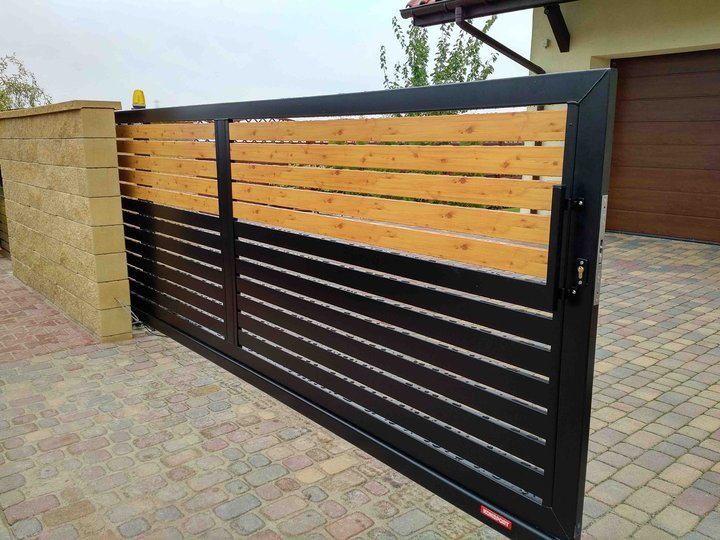
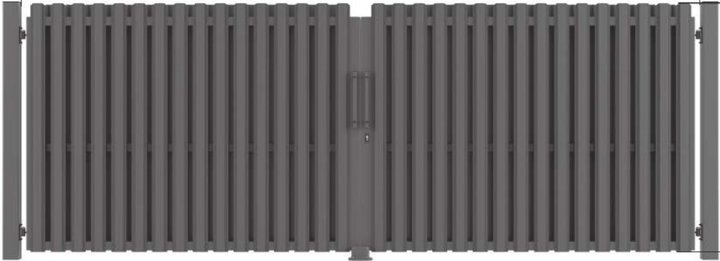
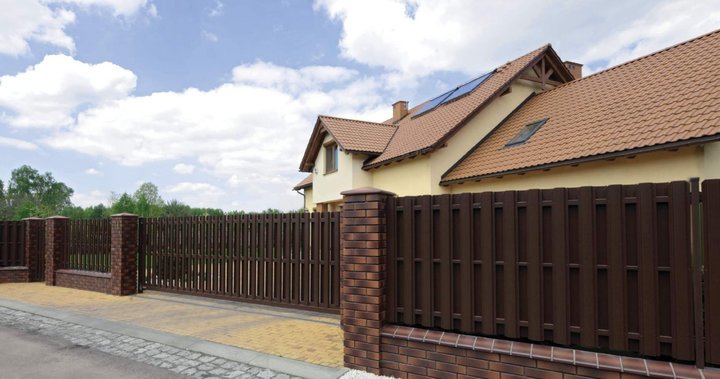
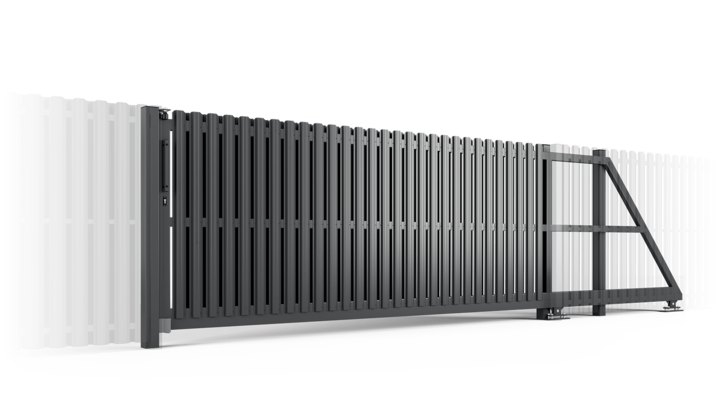
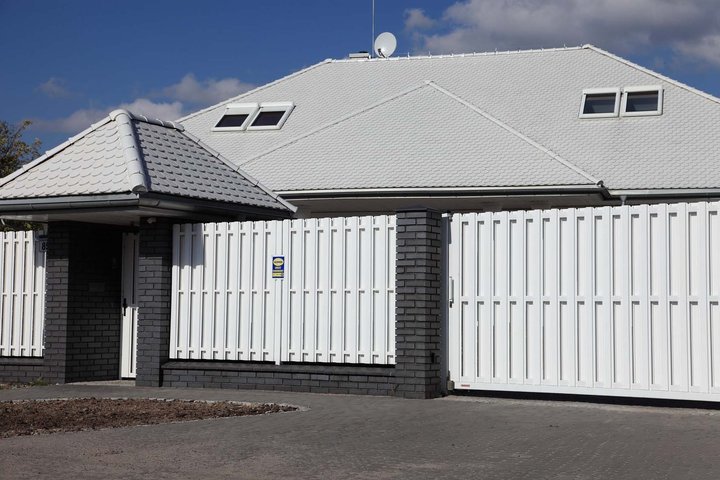
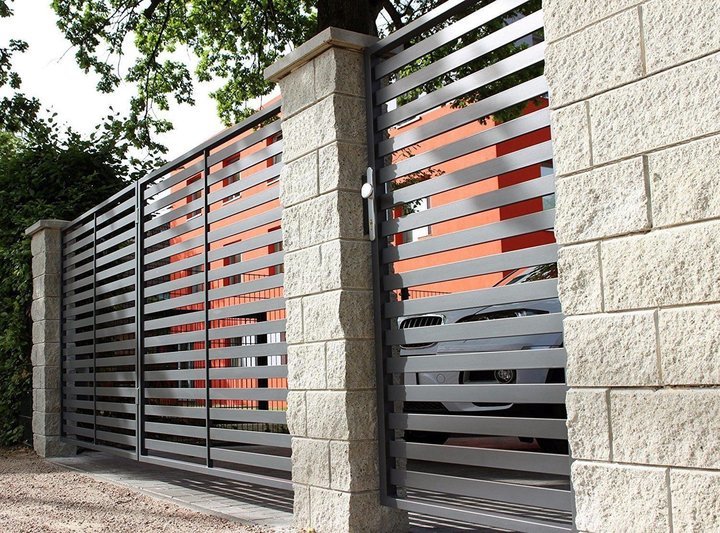
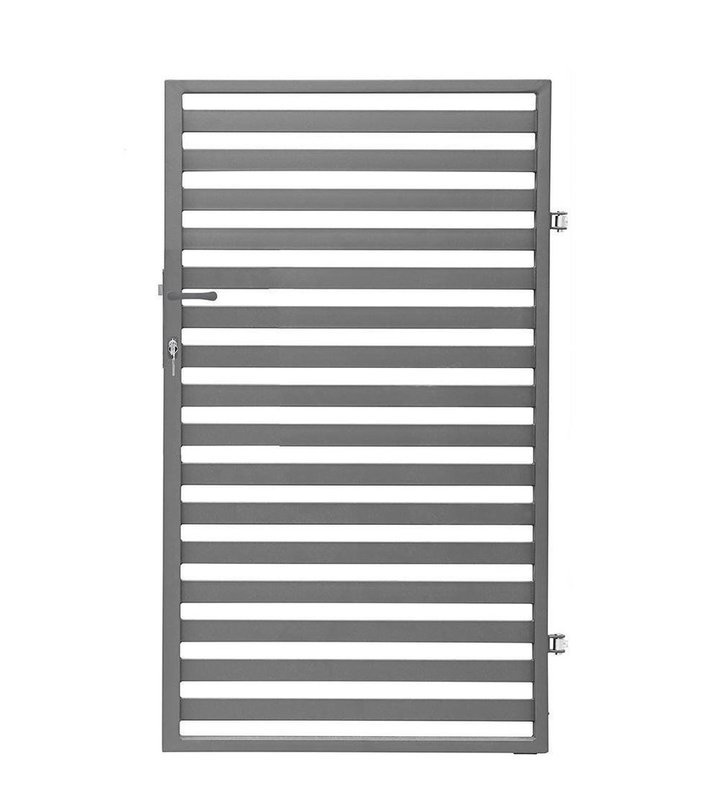
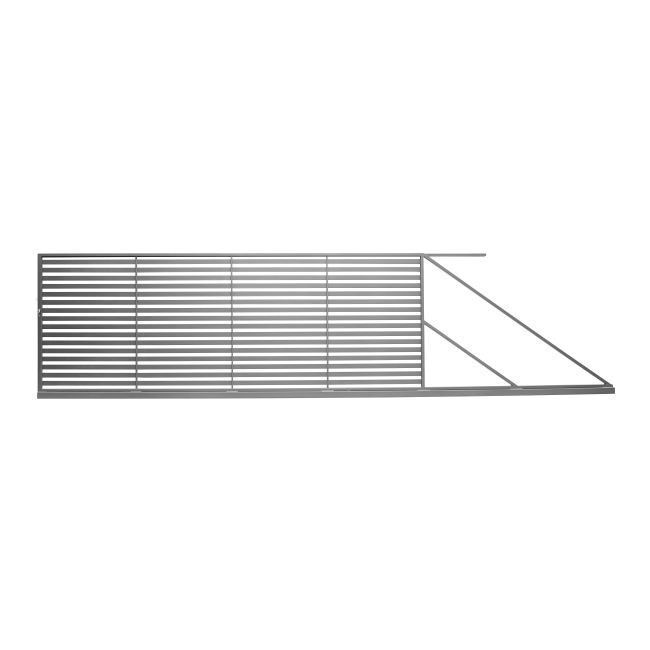
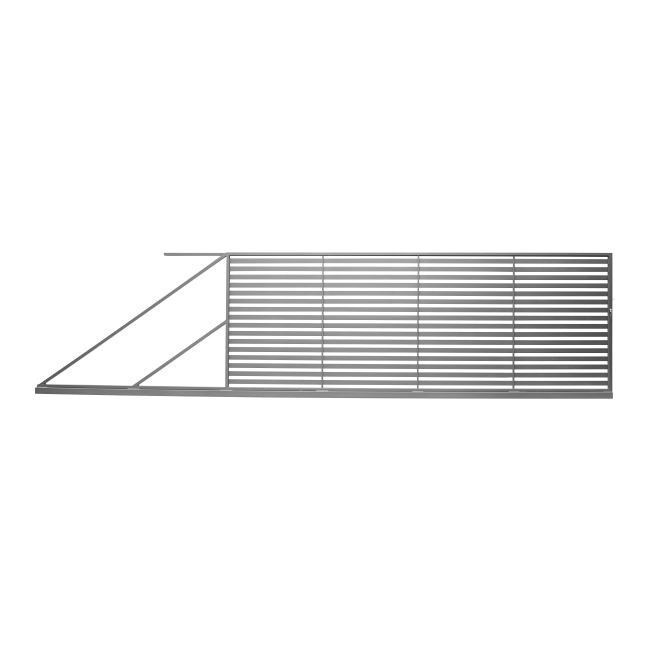
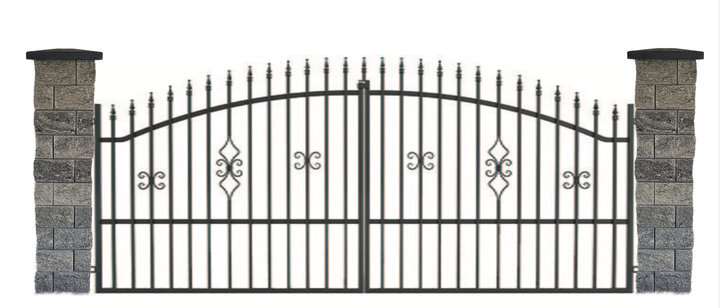
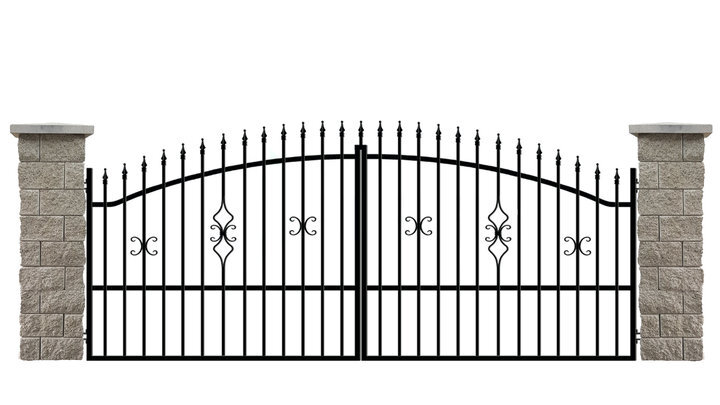
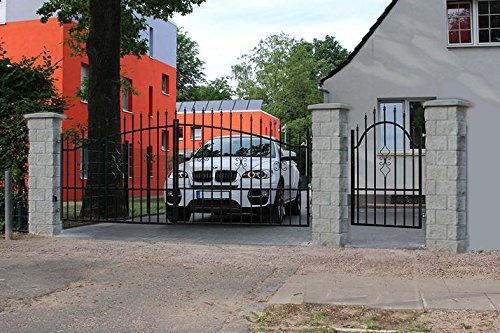
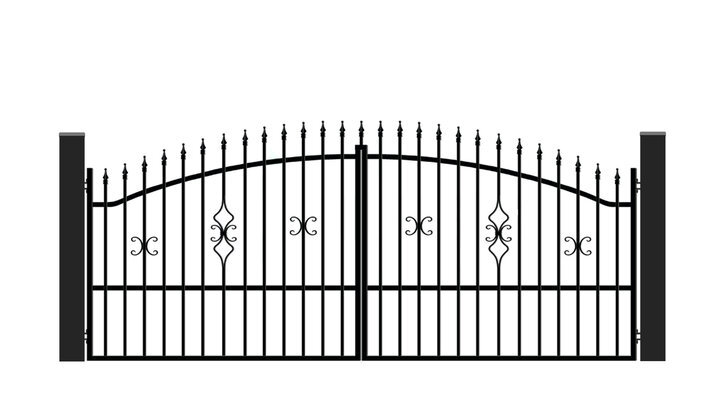
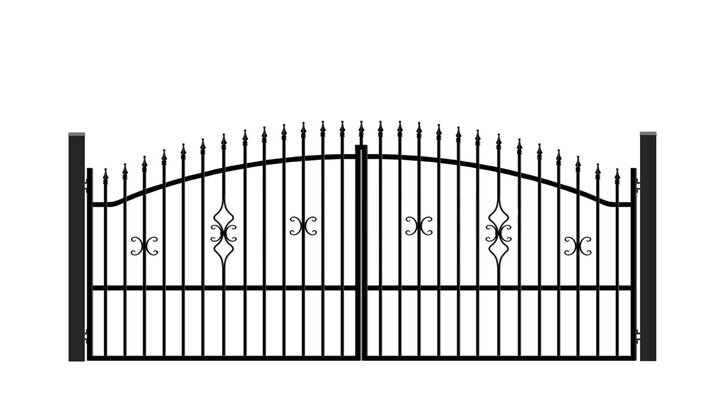
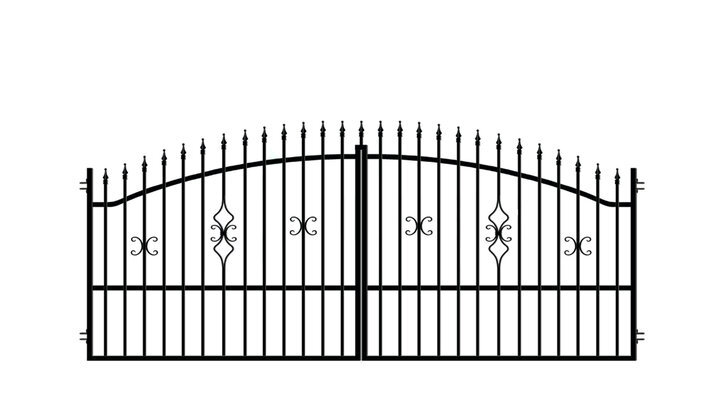
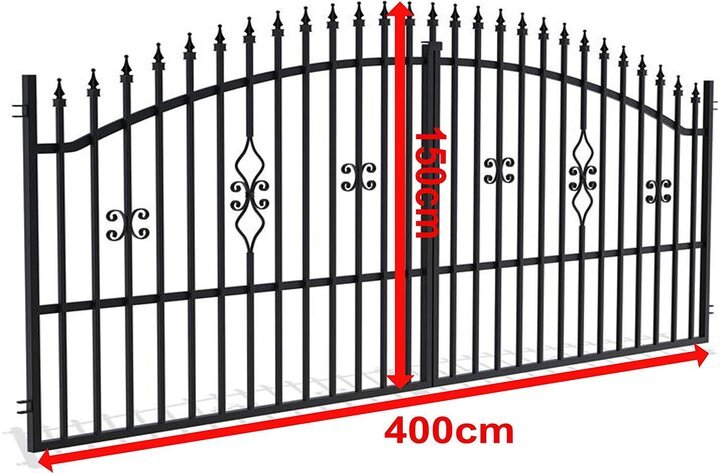
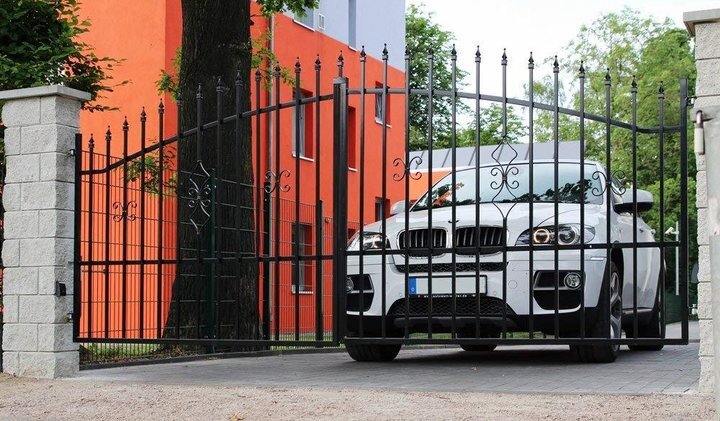
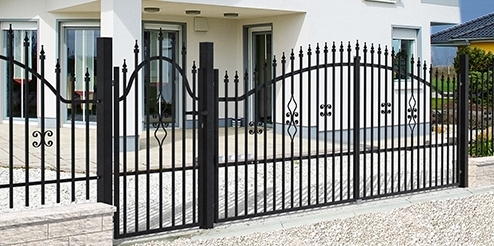
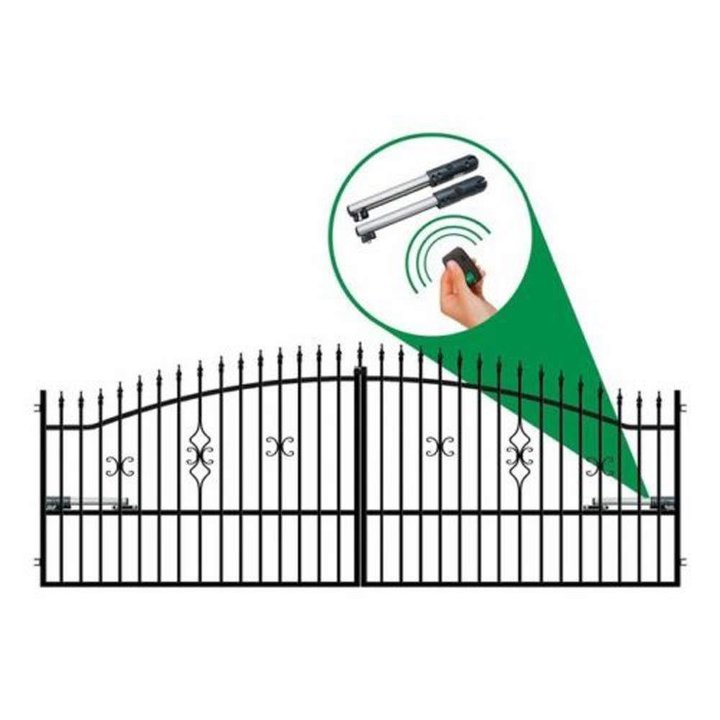
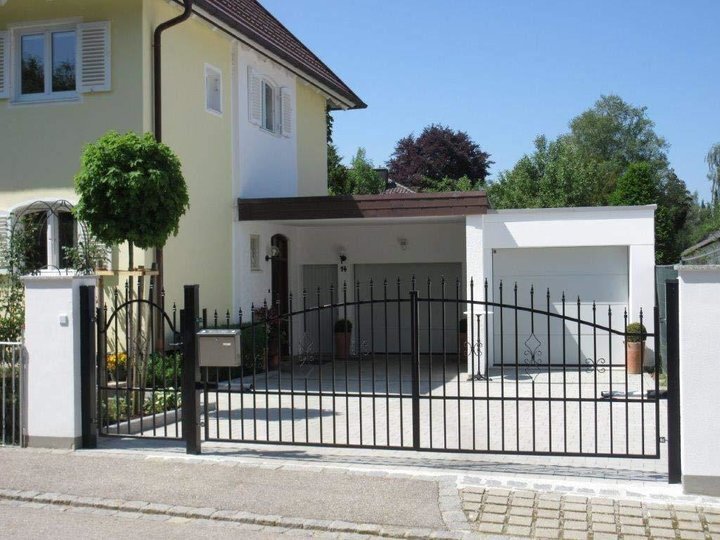
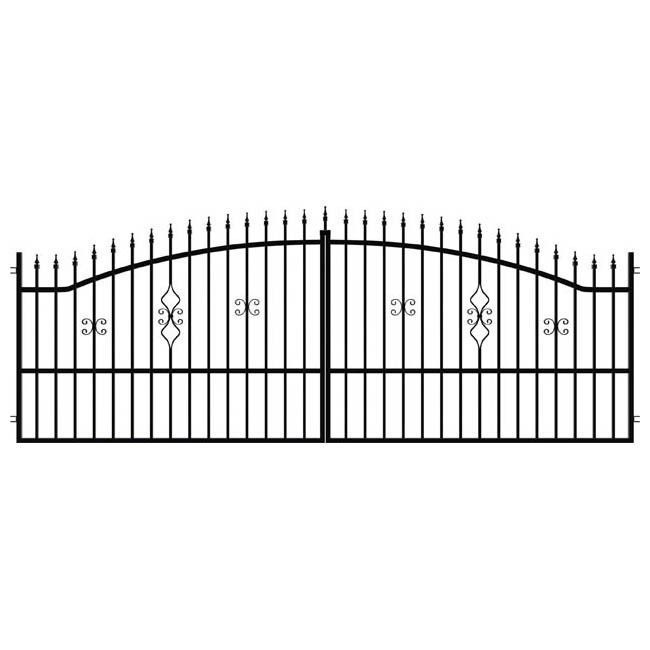
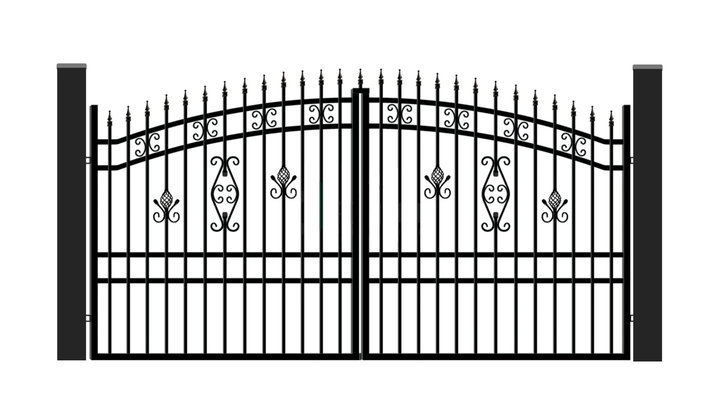
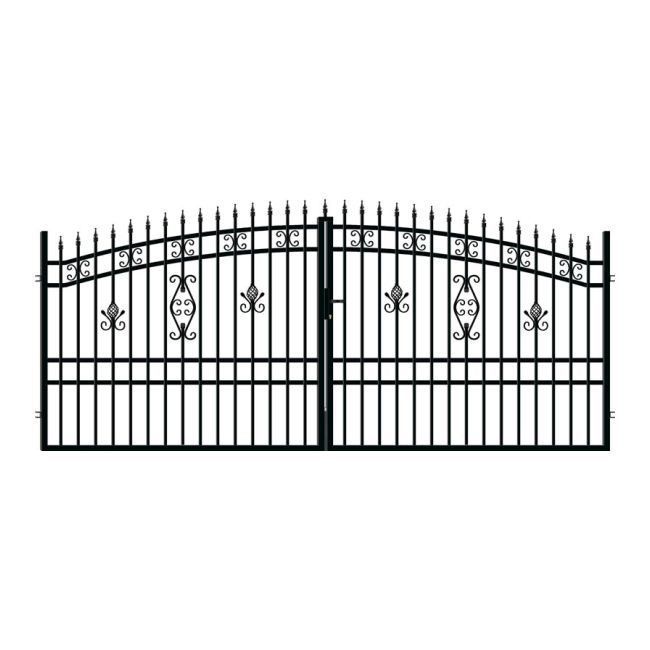
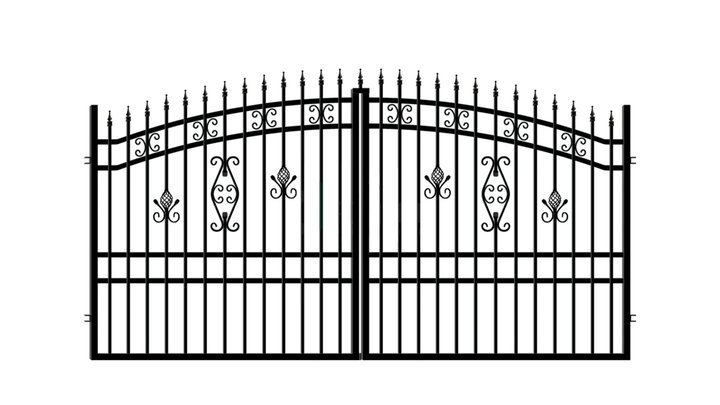
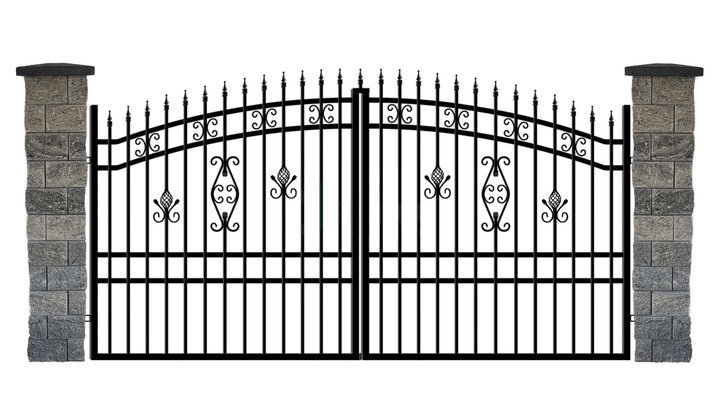
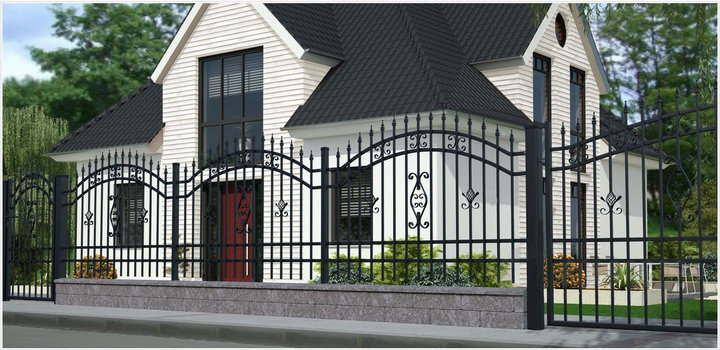
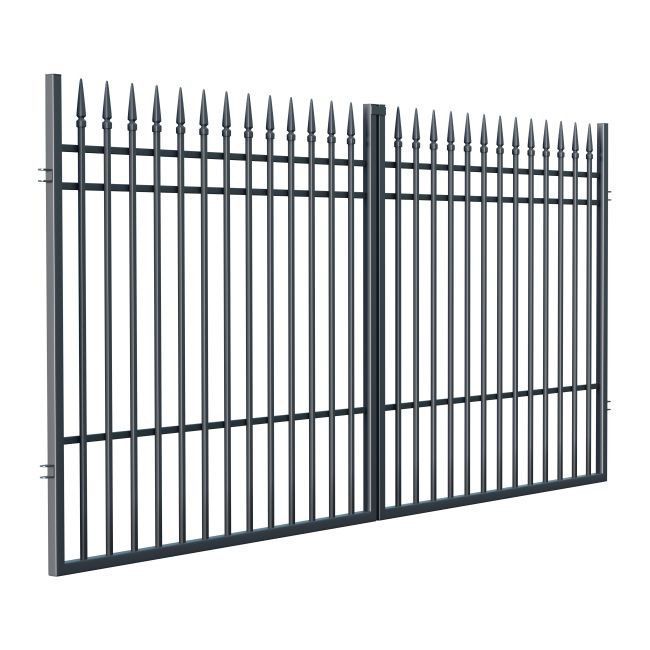
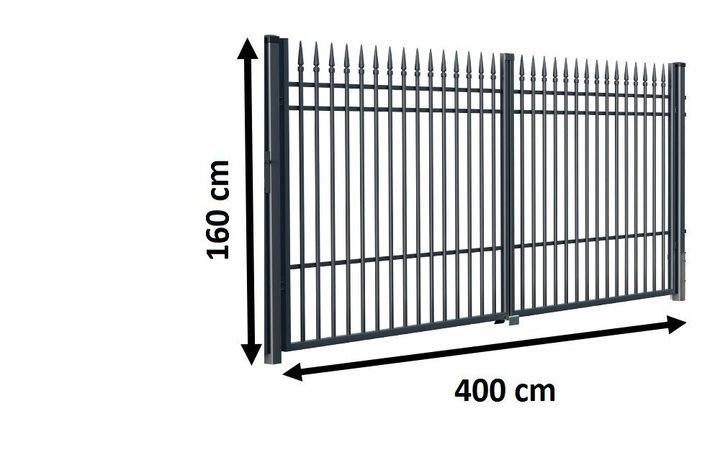
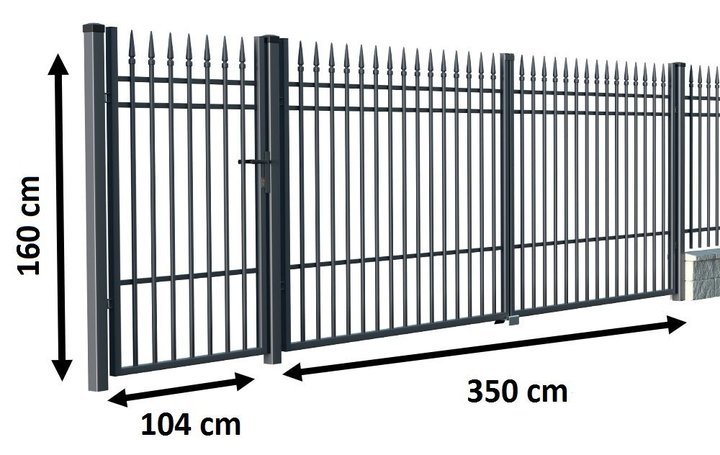
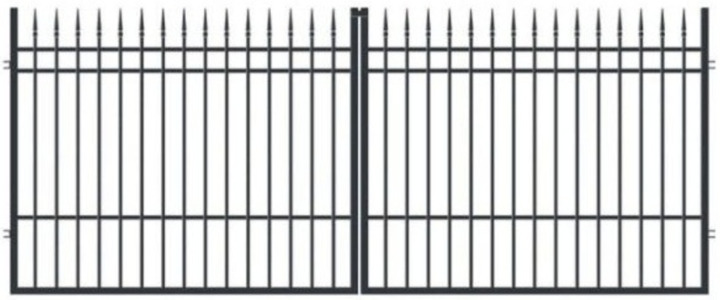
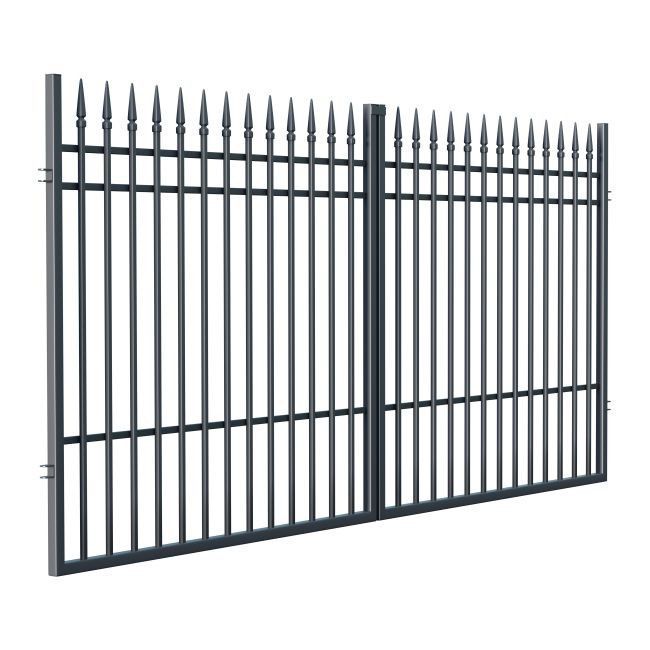
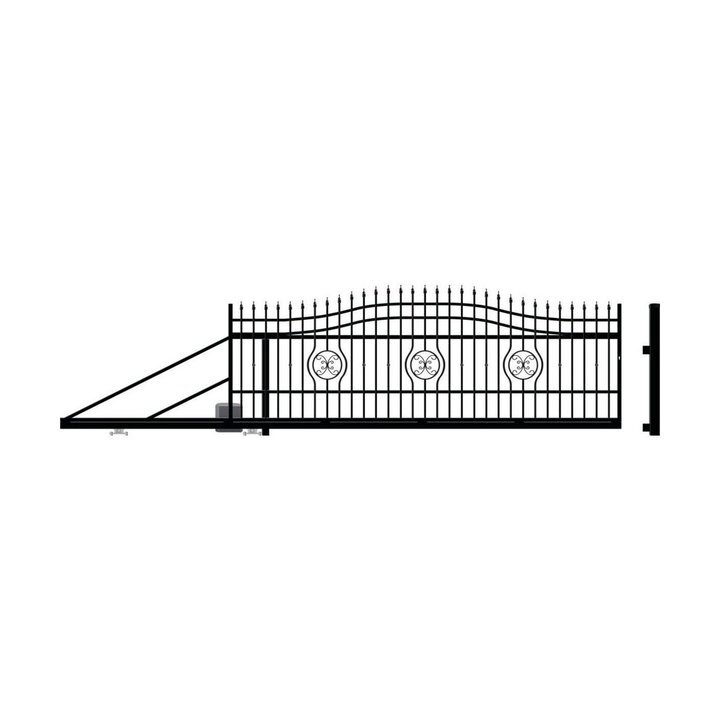
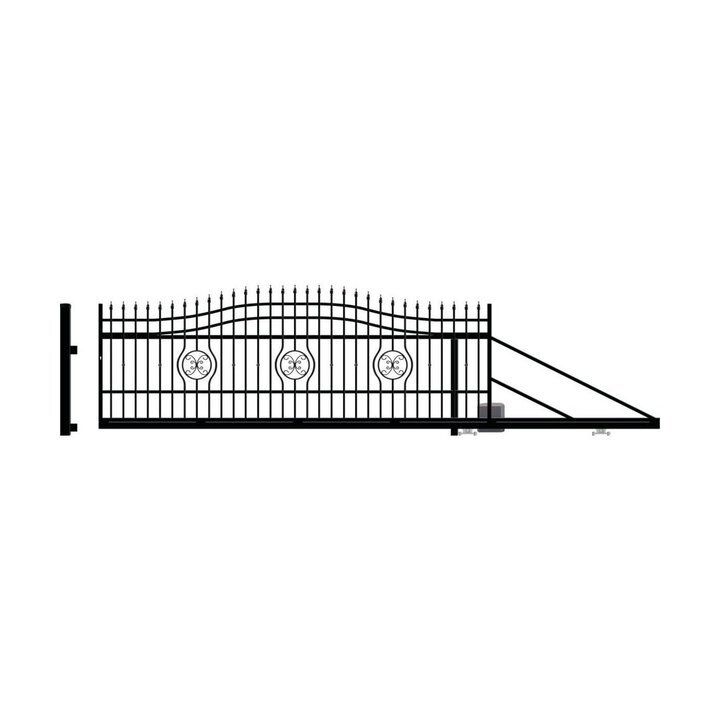
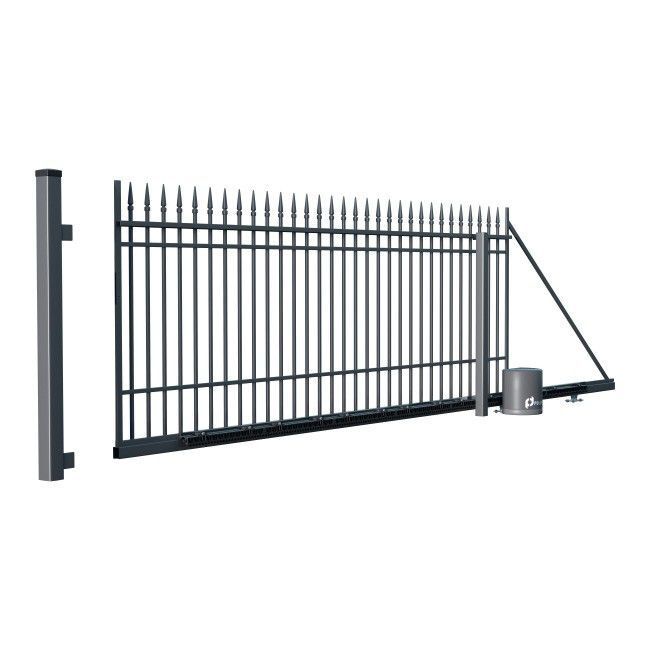
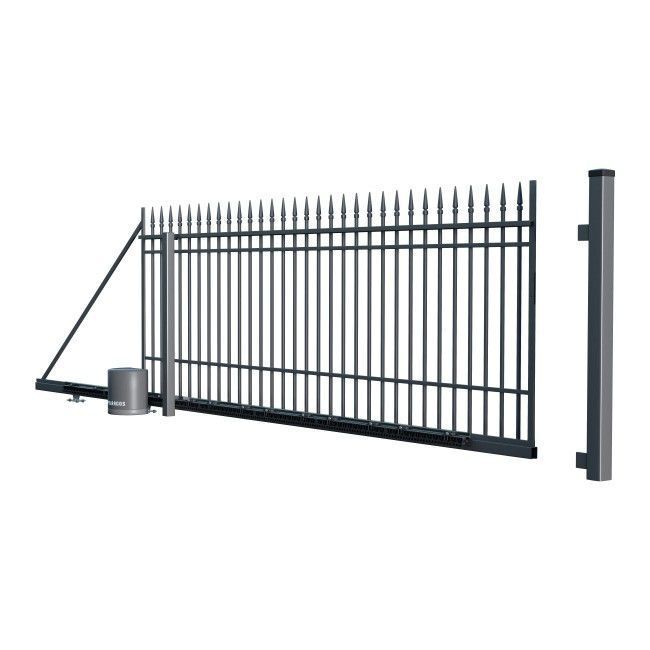
Every gate on this page is built to your opening, not cut down from a standard size. Choose how it moves — swinging, sliding, or cantilevered clear of the ground — then pick your material, your finish, and whether you want a motor fitted from the start. Widths run from 3 metres up to 10 metres on the industrial range, with 5 years on the gate and 2 years on the drive.
Not sure which type suits your driveway? The guidance below walks through it.
The choice is usually made for you by the shape of your driveway rather than by taste.
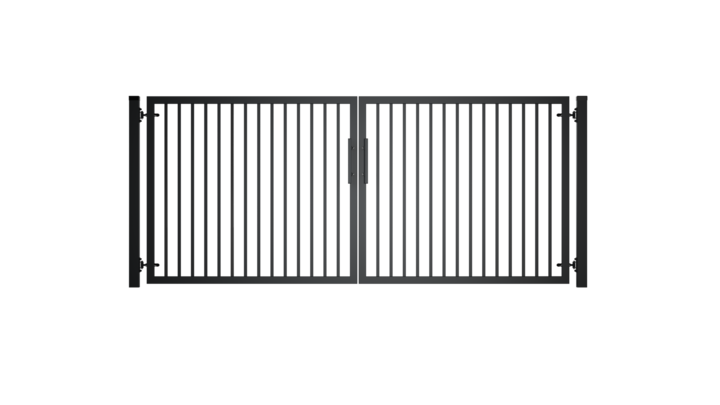
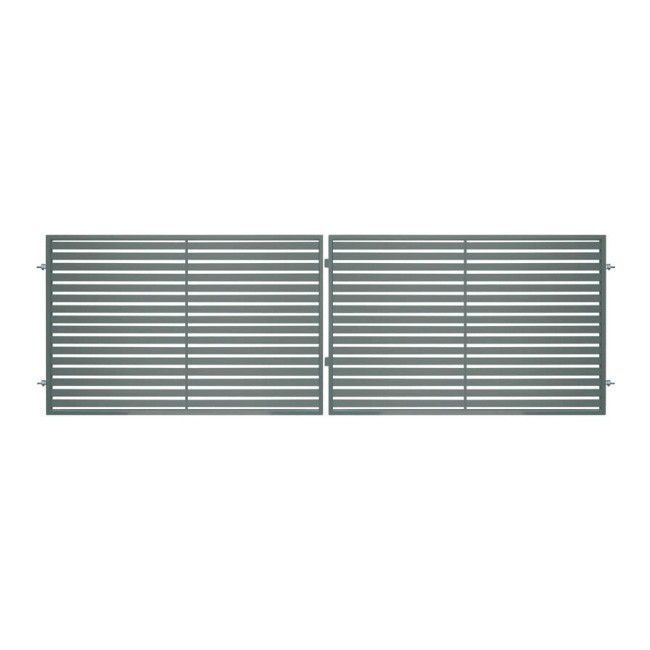
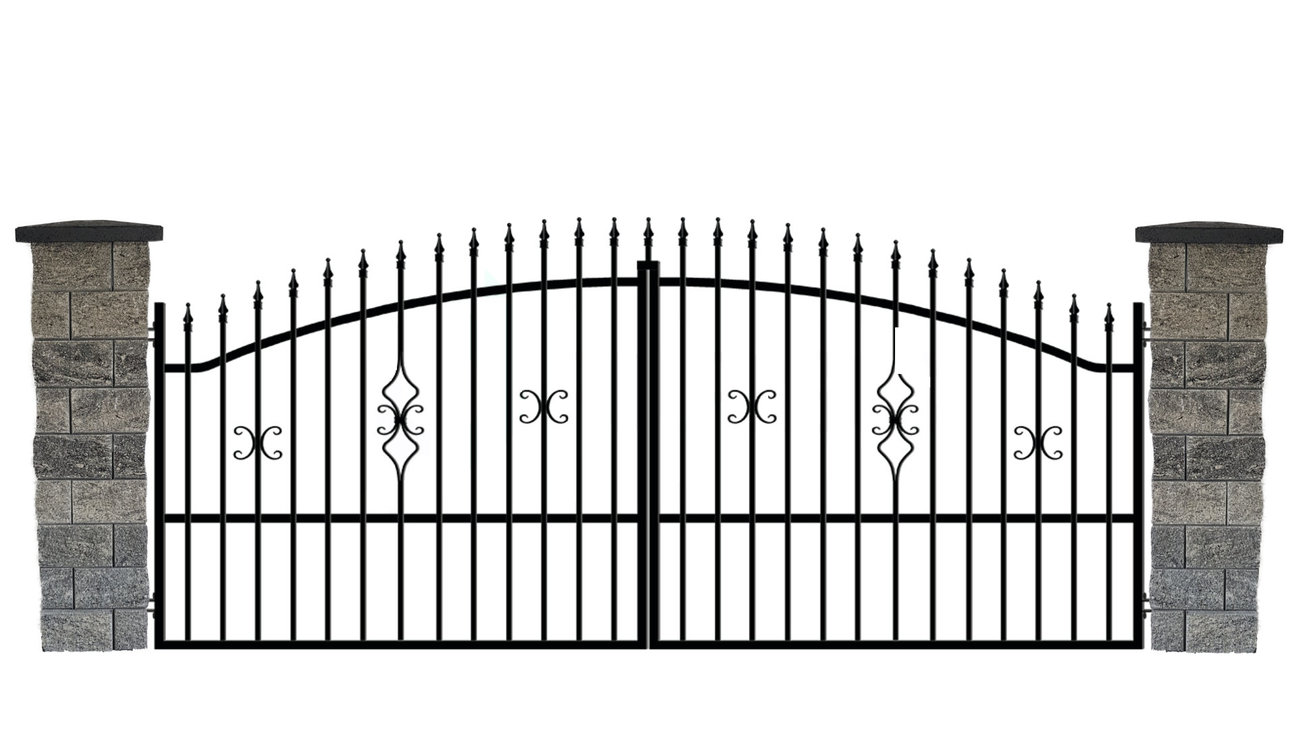
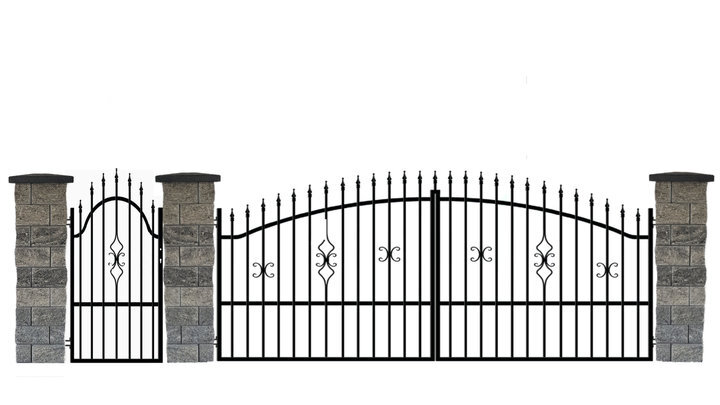
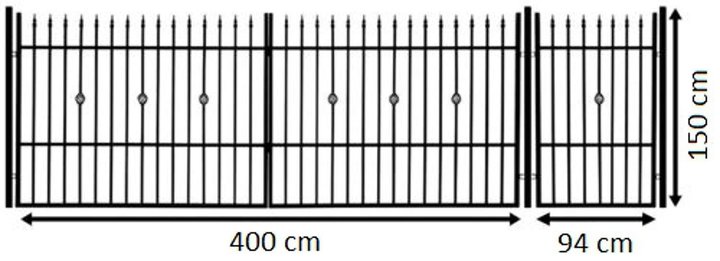
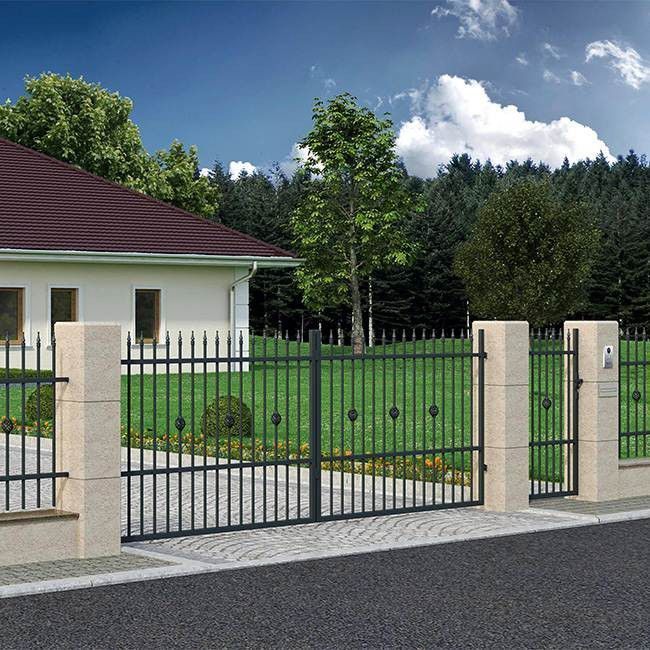
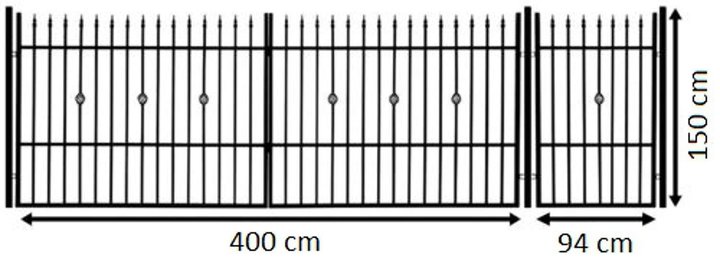
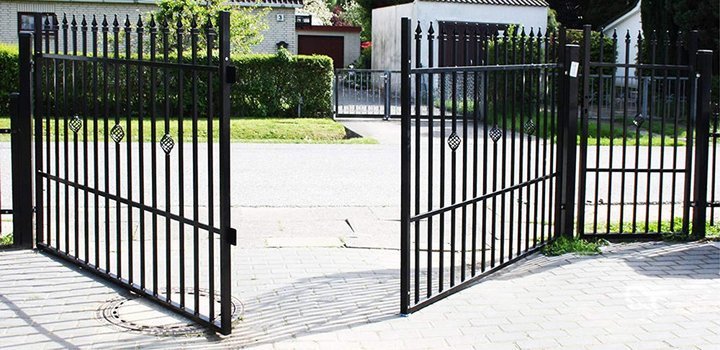
Double swing gates are the traditional option and the most common by some distance — most of the driveway range is built this way. Two leaves meet in the middle and open inwards or outwards on posts. They’re the cheapest to buy and the simplest to fit, but they need clear space to swing through, and on a driveway that slopes up towards the house the leading edge will catch on the ground before it opens fully.
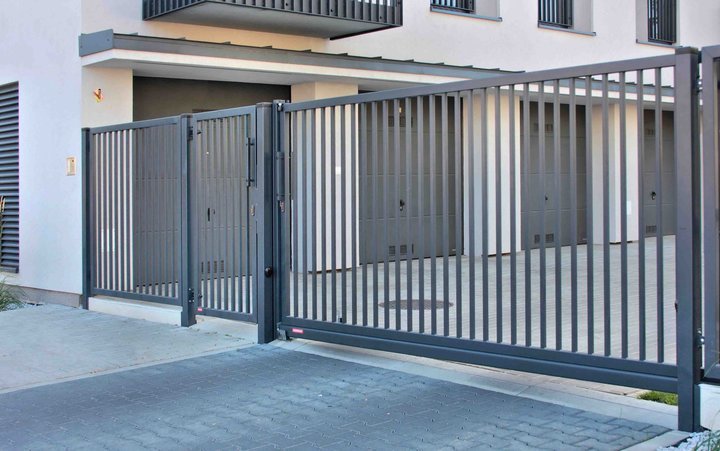
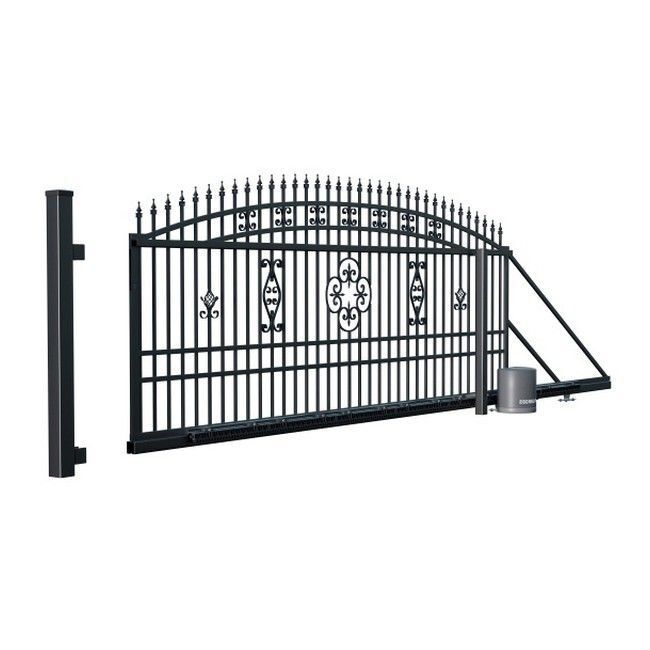
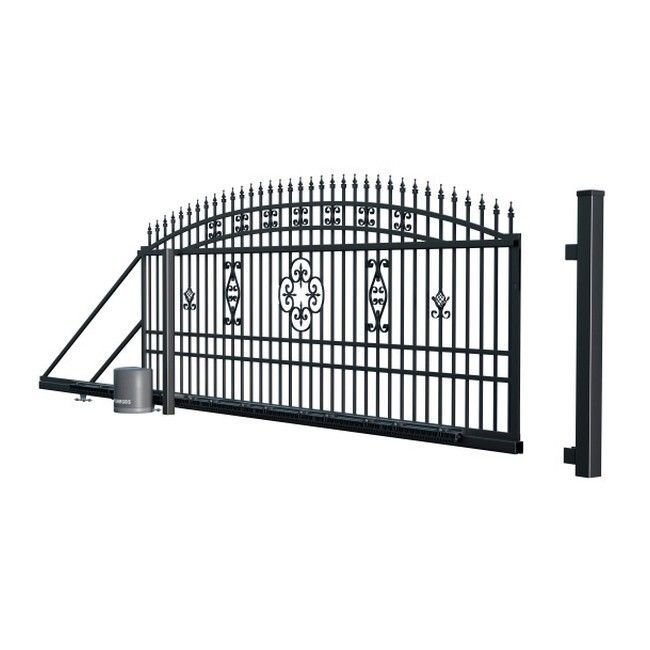
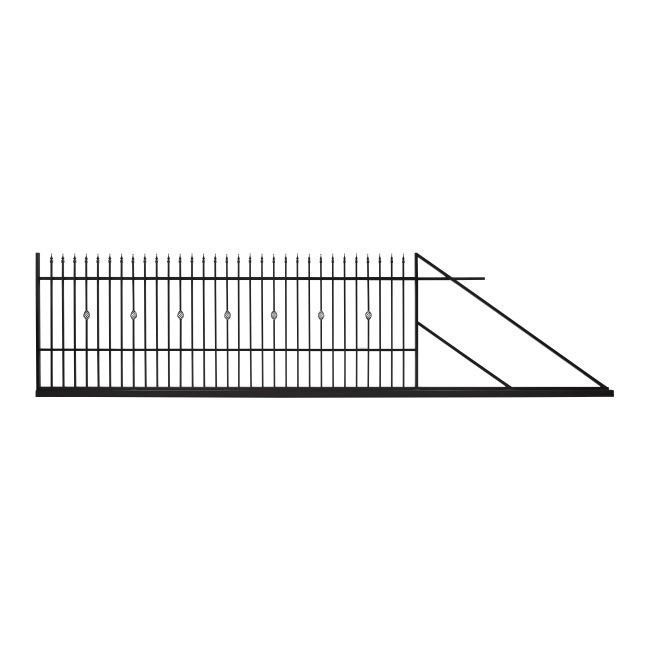
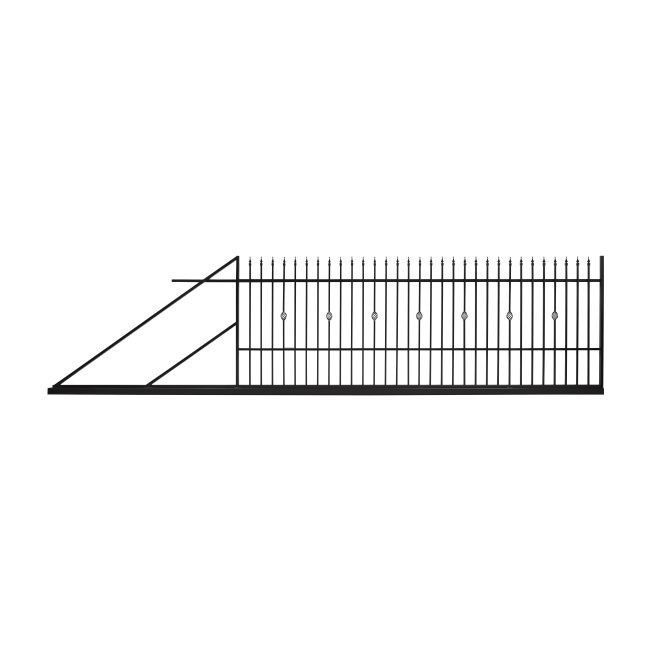
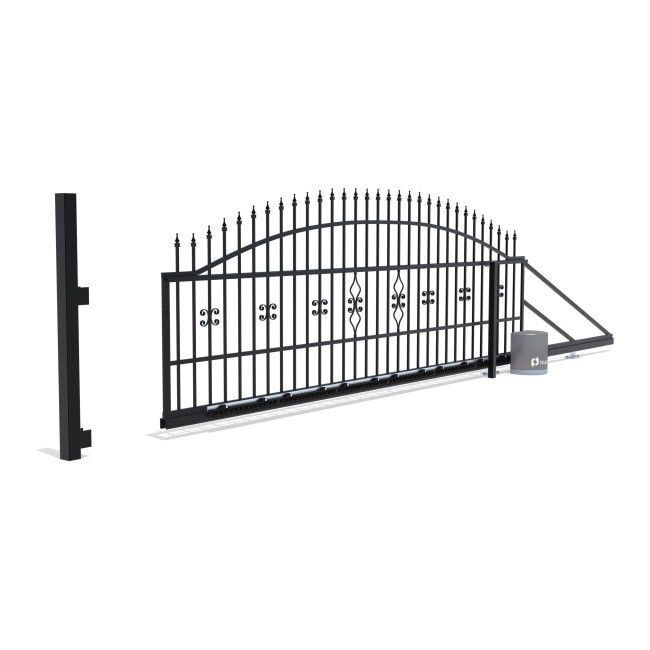
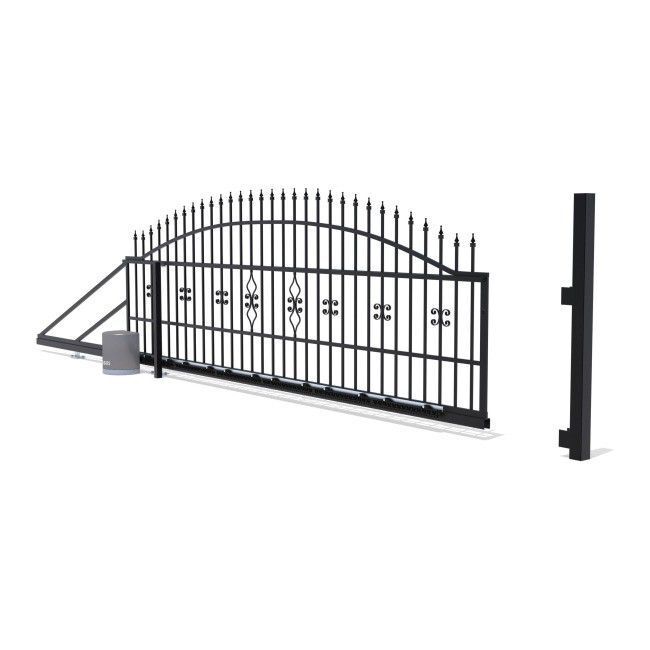
Sliding gates run along a track set into the driveway and slide sideways behind the wall or fence. Nothing swings into the drive itself, which is why they suit shorter driveways where a car has to sit close to the gate. The trade-off is the run-back: you need roughly the width of the gate again in clear space to one side. A 4-metre sliding gate wants about 5 metres of wall to disappear behind.
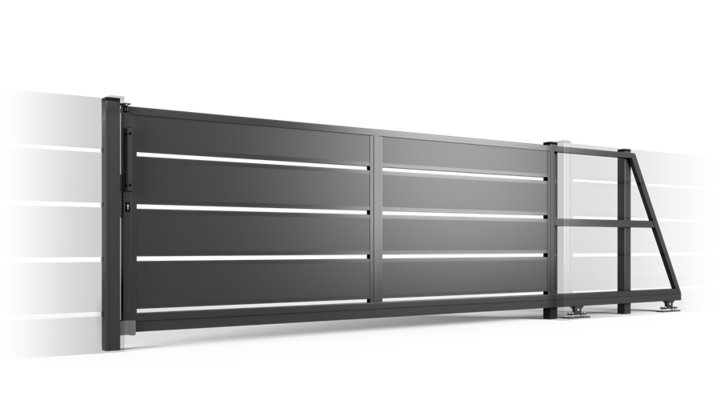
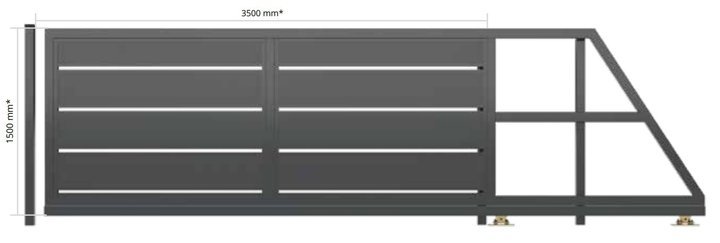
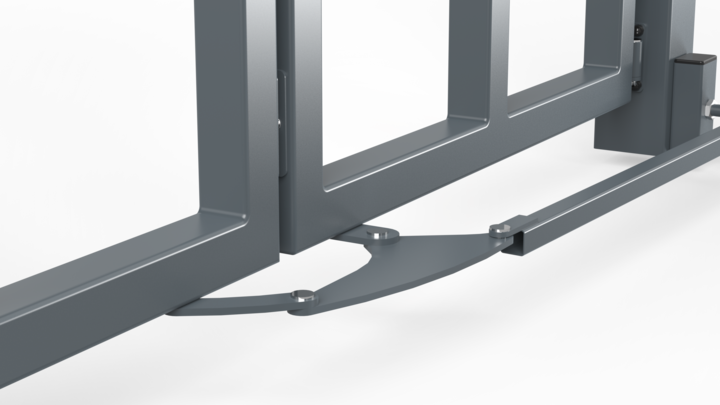
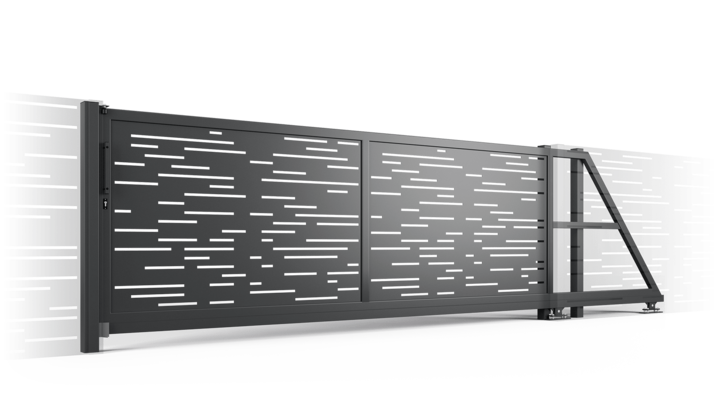
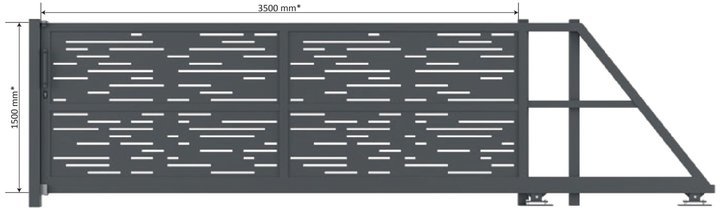
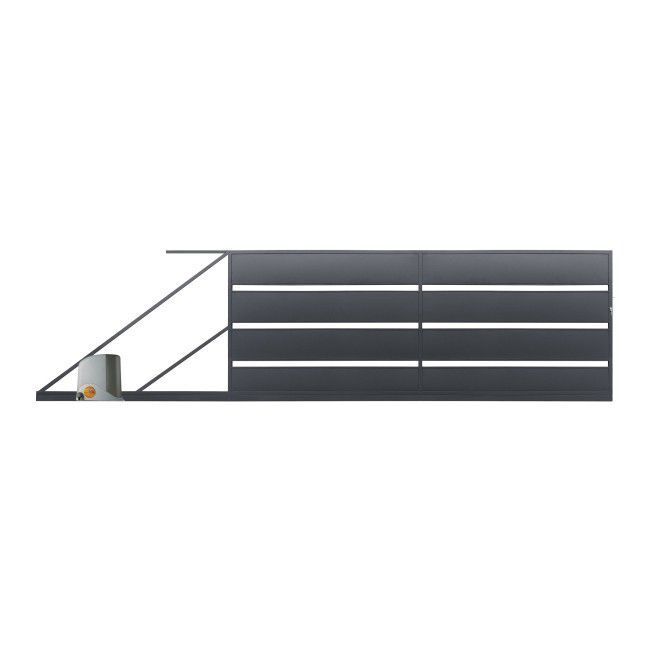
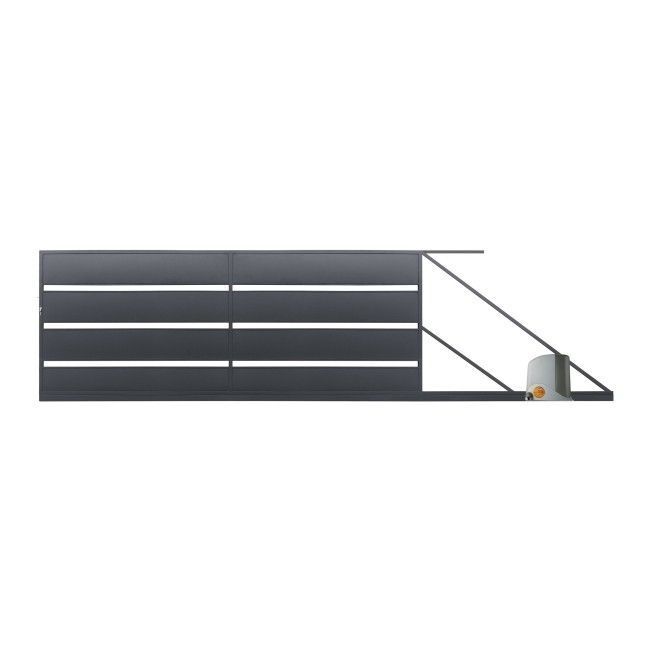
Cantilever gates are the answer when the ground won’t cooperate. There’s no track on the driveway at all — the gate is carried on rollers in a supporting frame and hangs clear above the surface. Snow, gravel, standing water, a slope, or a surface you’d rather not cut into: none of it matters. They cost more and need a longer run-back than a tracked slider, but for wide openings — and the industrial range goes to 10 metres — they’re often the only sensible design.
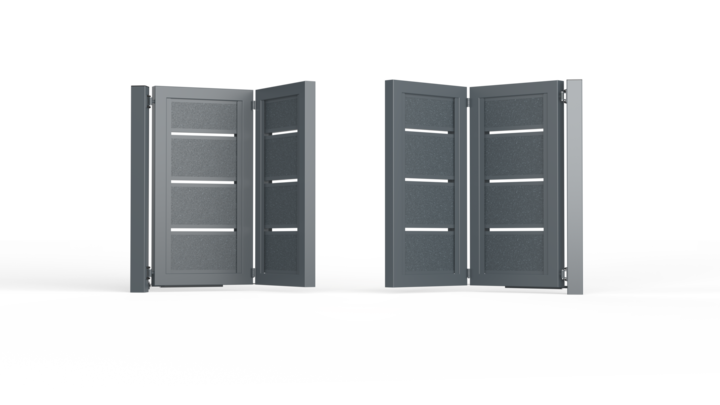
Bi-folding gates fold back on themselves, halving the space each leaf needs. Worth considering when the driveway is too short for a full swing and too narrow for a slider.
Browse by type: Sliding Gates · Swing Gates · Cantilever Gates · Folding Gates
Two materials, and the honest answer is that both will outlast most of what surrounds them.
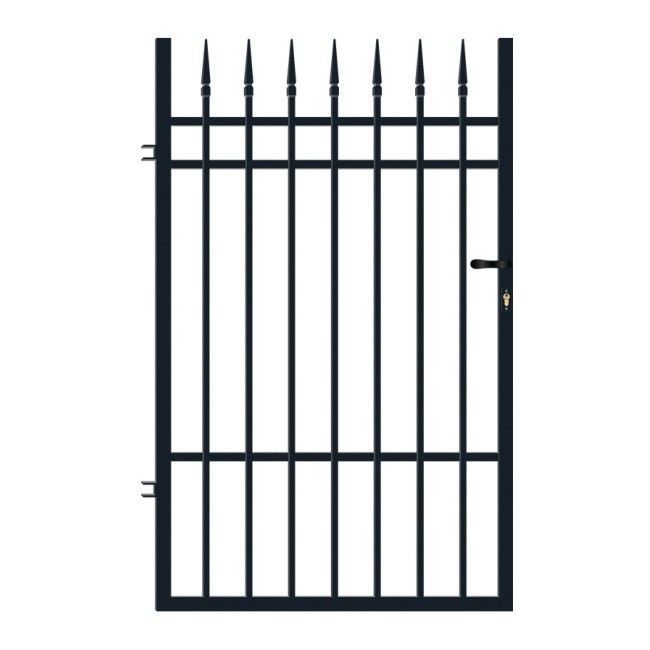
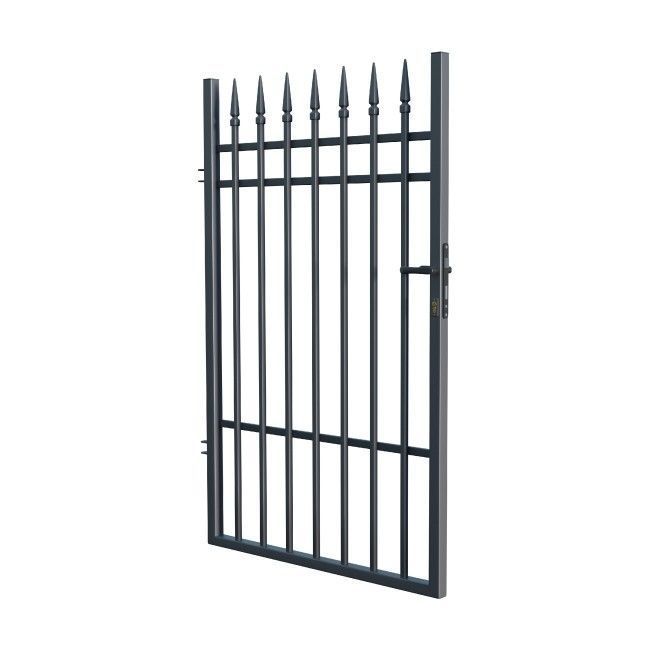
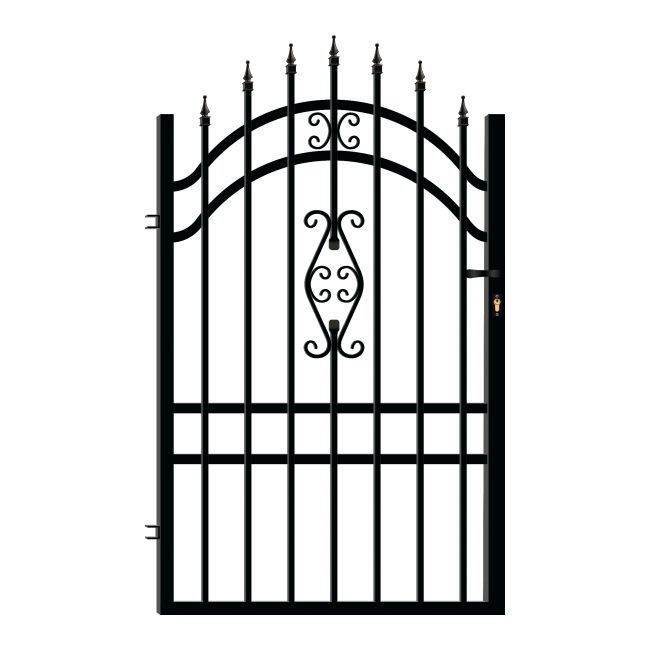
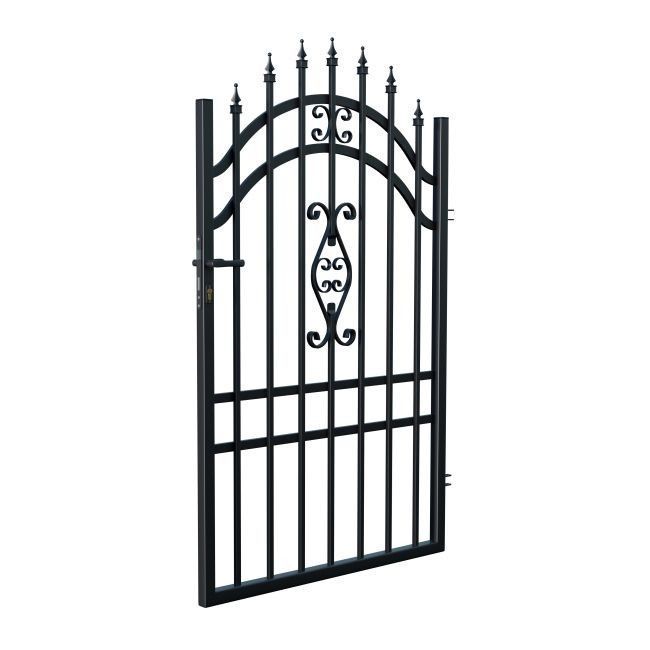
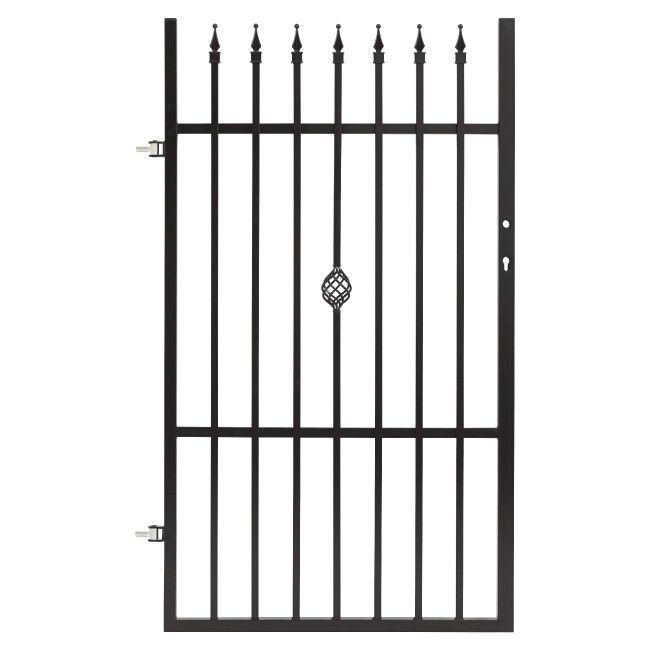
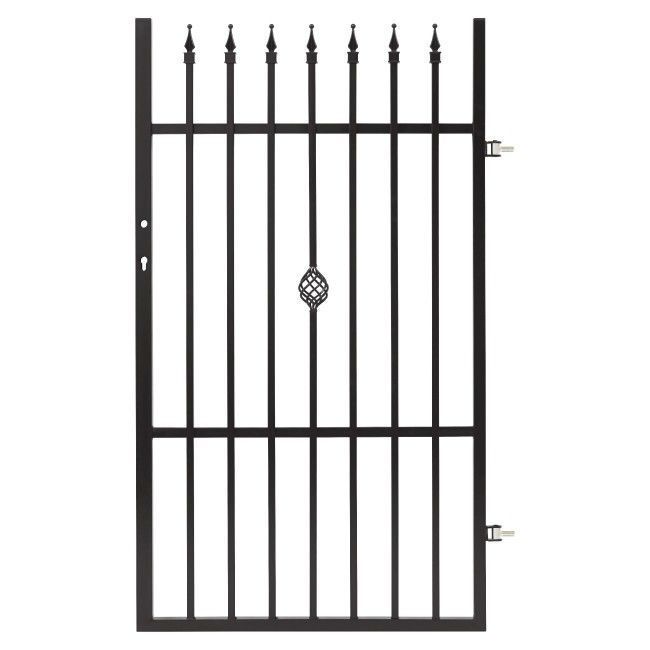
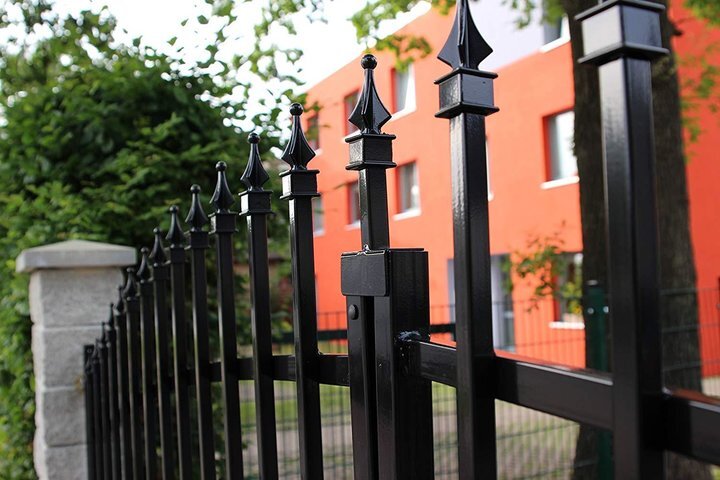
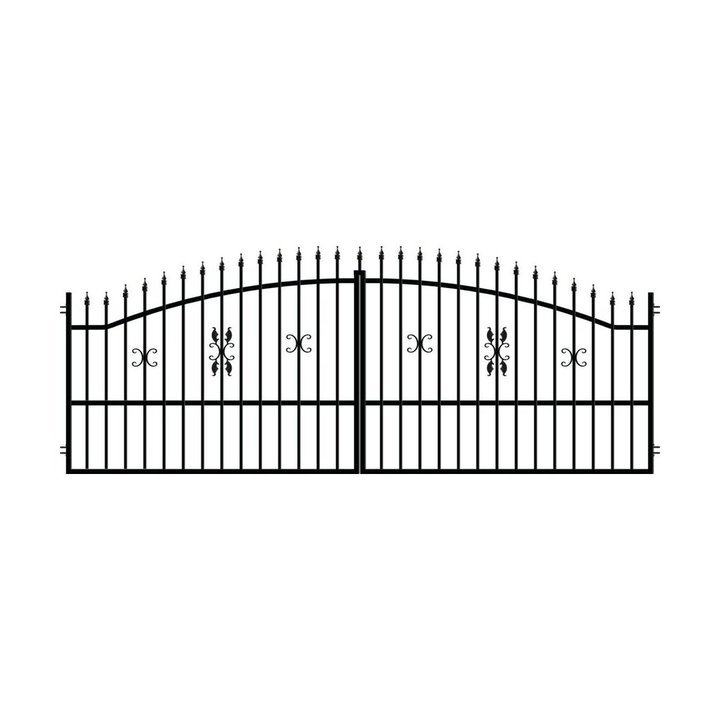
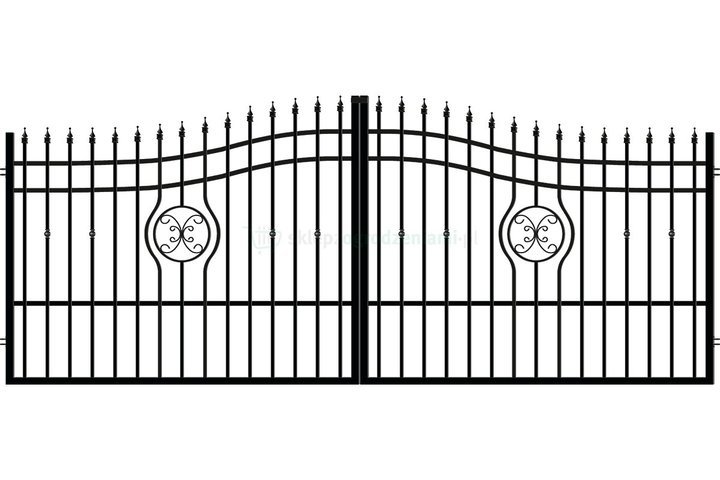
Steel is the heavier of the two and the one to choose if security is the priority. The classic wrought-iron designs — vertical bars, arched top rails, hand-finished ornamental centres — are all built on galvanised steel box section. Every steel gate is galvanised and then powder-coated, so the coating isn’t the only thing standing between the metal and a British winter. The heavier industrial gates are hot-dip galvanised, coated to PN-EN ISO 12944 (C3), and welded to PN-EN ISO 3834. A 4-metre steel driveway gate weighs somewhere between 200 kg and 300 kg, which matters when you come to specify a motor.
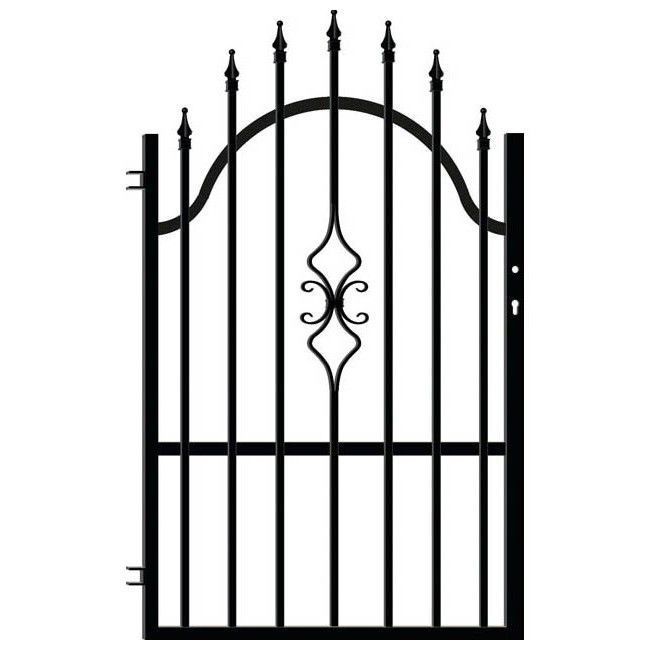
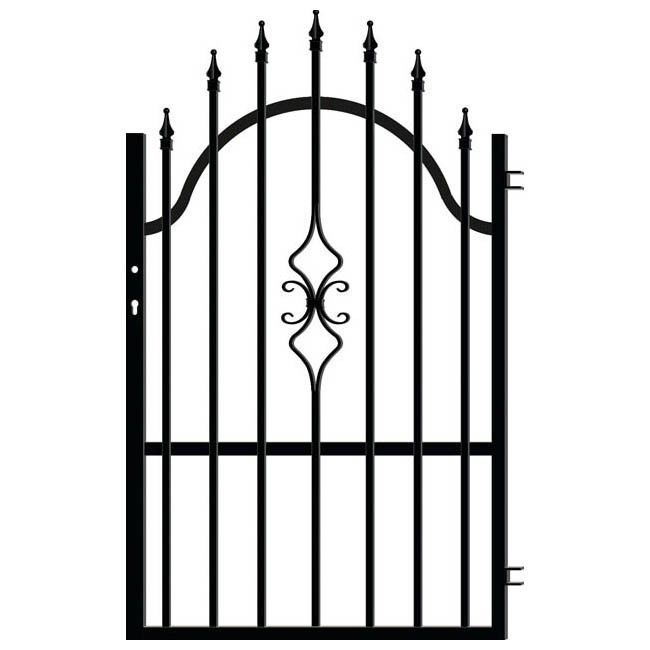
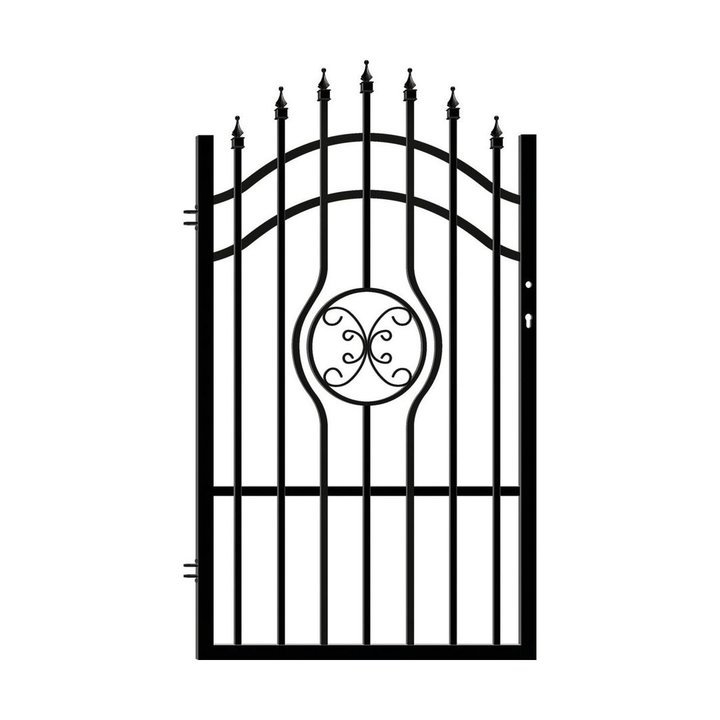
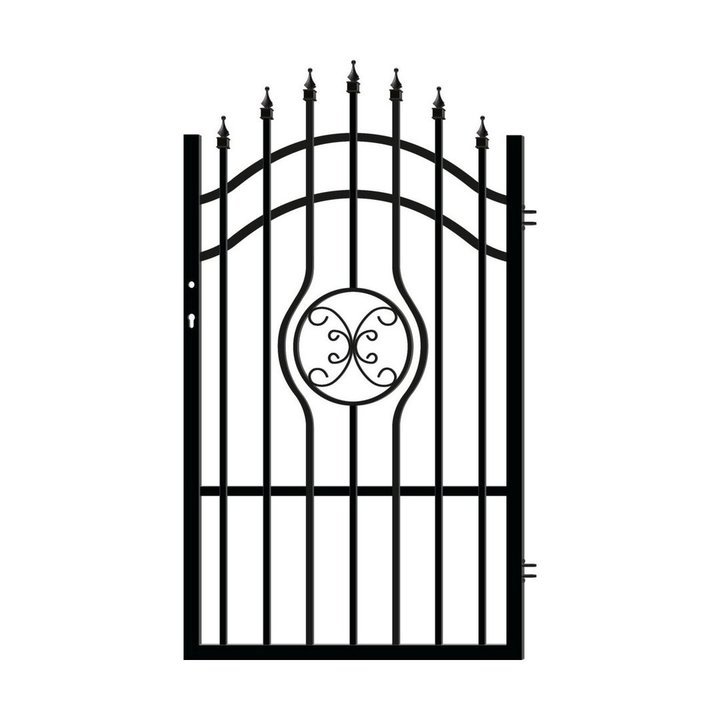
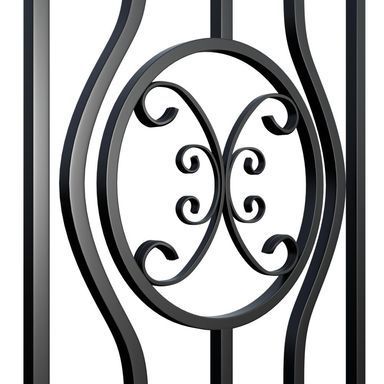
Wrought-iron style gates sit within the steel range rather than beside it. If you’re after the traditional look — ornamental scrollwork, curved heads, anti-climb tips — that’s what these are, built with modern galvanising rather than genuine forged iron.
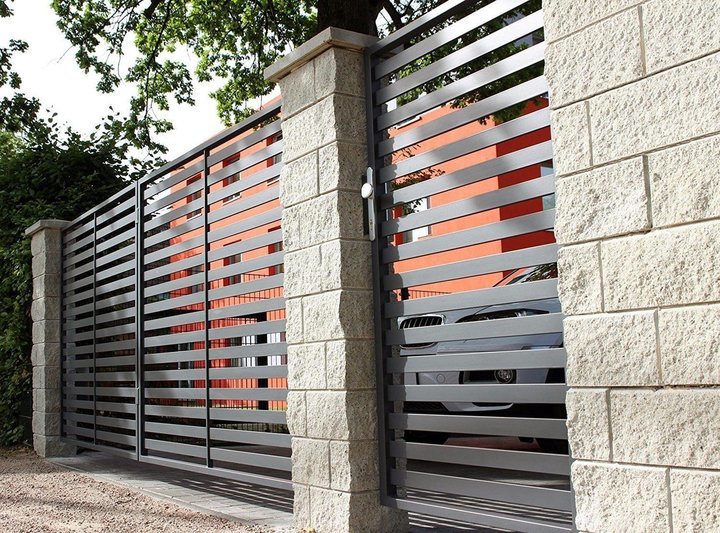
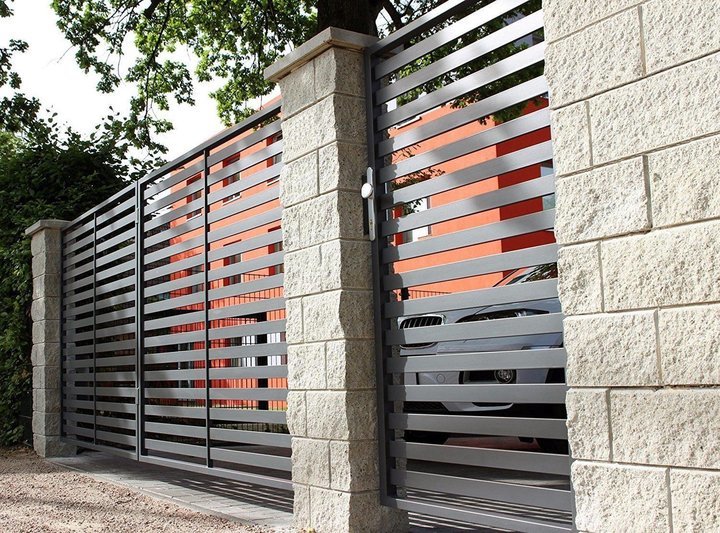
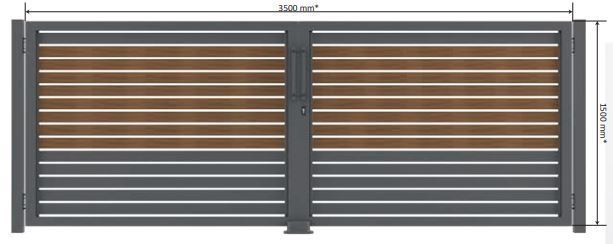
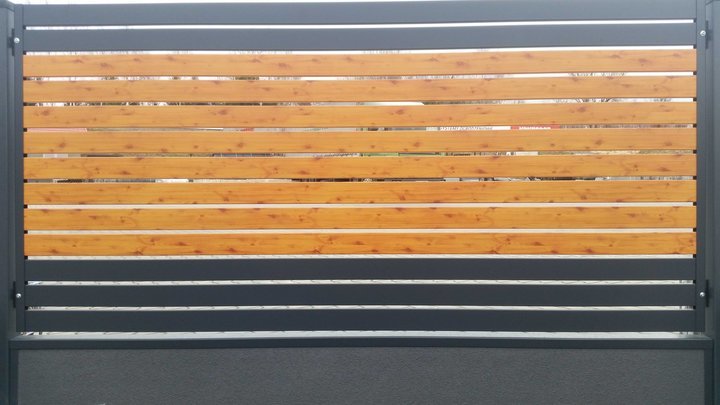
Aluminium weighs a fraction of the same gate in steel — often around 100 kg where steel would be 300 kg — and it will not rust at all. Because the panels are lighter, the modern designs are possible: wide horizontal louvre bars, laser-cut slats, vertical picket slats, and two-tone wood-effect finishes that give you the look of timber without the annual sanding. Lighter leaves also put less strain on a motor, so aluminium is the easier material to automate on a wide opening.
| Steel | Aluminium | |
|---|---|---|
| Typical 4m gate weight | 200–300 kg | ~100 kg |
| Corrosion protection | Galvanised + powder-coated | Won’t rust; powder-coated finish |
| Best for | Security, traditional looks | Modern designs, wide spans, automation |
| Style range | Classic bar, wrought-iron ornament, mesh | Louvre, slat, vertical slat, two-tone |
Measure the opening itself — post face to post face, or wall to wall — not the width of your car, and not the tarmac. Take the measurement at three heights if you’re fitting between old brick pillars, because Victorian pillars are rarely plumb, and use the smallest figure.
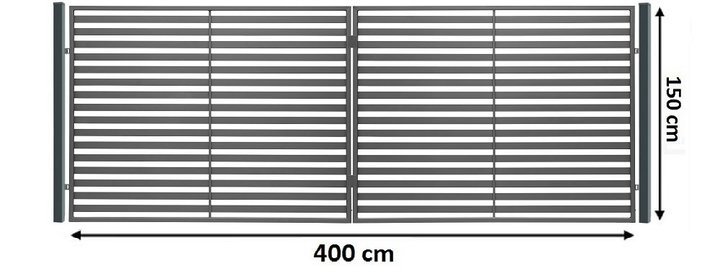
The standard configurations run from 3m to 4m wide and 1.5m to 1.75m high, which covers most domestic driveways. Beyond that, everything is made to measure in bands up to 10 metres — you select your width band and height band at checkout and the gate is built to it.
Height is worth a moment’s thought. A gate that comes up to chest height reads as a boundary; one at 1.8m or above reads as a barrier and will block the view out as well as in. Anything over 2m needs planning permission (see below), so 1.5m–1.8m is where most driveway gates end up.
Ground clearance matters too. Swing gates need the surface to fall away from the hinge or stay level; if the driveway rises, a cantilever or sliding gate solves the problem outright.
Most driveway gates here are supplied automation-ready, and roughly two thirds of the range ships with a drive fitted.
The drive options are:
On safety: an electric gate is legally classed as machinery in the UK, and the responsibility for it being safe sits with the owner. In practice that means force limitation and obstacle detection built into the drive, plus photocells (light barriers) across the opening so the gate stops if anything is in the way. A warning lamp is strongly advised on a gate that opens onto a road or pavement. Both are available as accessories, and the light barriers are included as standard with the Smart Connect package.
What moves the price, in rough order of impact: width first, then whether it’s automated, then material and design, then posts and finish. Going from a standard 4m size to a made-to-measure width is a smaller jump than most people expect; adding 2 metres of width is a larger one.
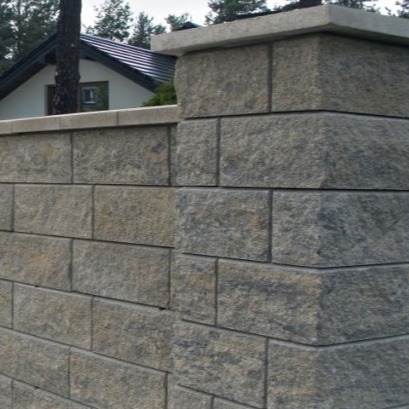
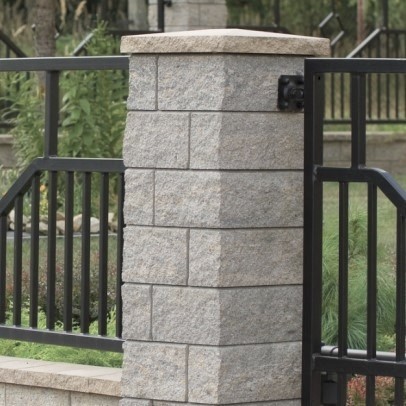
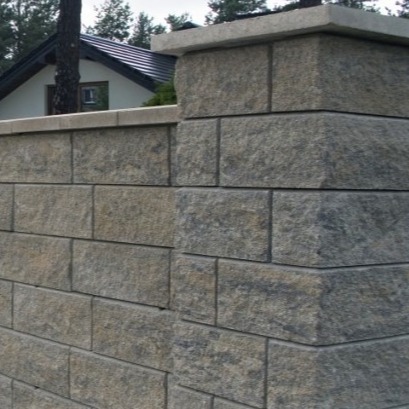
Posts are priced separately unless you select them with the gate — options run from 7×7cm and 10×10cm steel through to 38×38cm stone-look post sets in white or anthracite.
Under permitted development in England and Wales, you can put up a driveway gate up to 2 metres high without applying for planning permission — but only 1 metre if it fronts a highway, which includes any public road or the footpath beside it. Most driveway gates face a road, so 1m is the figure that usually applies, and most people over that height do need consent.
Listed buildings and conservation areas are treated separately: permitted development rights are usually restricted, and you should assume you need to ask. Scotland and Northern Ireland have their own rules.
None of this is legal advice, and the safe move on anything marginal is a five-minute call to your local planning office before you order — a made-to-measure gate can’t be returned because the council said no.
Every gate is powder-coated. The steel range comes in the three finishes that account for almost all UK driveway gates: Anthracite (RAL 7016), Jet Black (RAL 9005) and Traffic White (RAL 9016).
The aluminium range opens this up considerably — a core palette of 8 outdoor shades including Moss Green, Black Grey, Stone Grey, Window Grey and Chocolate Brown, and a full selection of 28 RAL colours on the made-to-measure designs.
Anthracite is the safe choice against modern brick and render; black suits period properties and traditional wrought-iron designs; white works on rendered and coastal houses but shows dirt sooner.
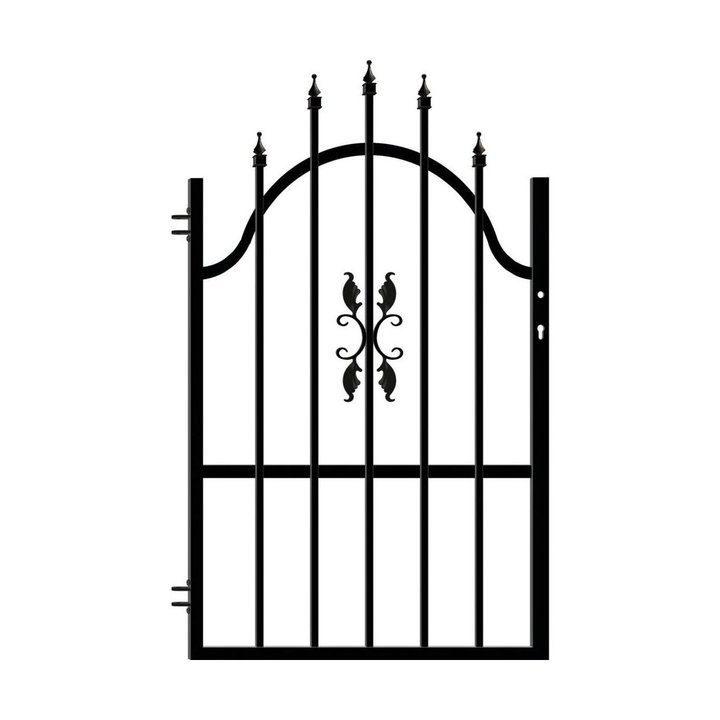
Most driveway gates can be ordered with a pedestrian insert built into the leaf — you select it left, right, or none at checkout — so you can walk in without opening the whole gate. Where the layout suits it better, there are separate pedestrian and side gates in the same designs and the same RAL finishes, so the two match properly.
Also worth specifying at the same time: posts (steel or stone-look), locking bolts, ground stoppers, latch sets, and the intercom and mailbox posts — including versions with video intercom, code keypad or fingerprint sensor.
Do I need planning permission for a driveway gate? Not if it’s under 2 metres — but only 1 metre if it fronts a road or pavement, which most driveway gates do. Listed buildings and conservation areas are treated separately. Check with your local planning office before ordering.
Are driveway gates a standard size? There are standard configurations from 3m to 4m wide and 1.5m to 1.75m high, but every gate here can be made to your exact opening in bands up to 10 metres. Old brick pillars are rarely square, so measuring is usually worth the ten minutes.
How much room do I need behind a sliding gate? Roughly the width of the gate again in clear run-back to one side — about 5 metres of wall for a 4-metre gate. If you haven’t got it, a bi-folding or swing gate is the better fit.
Will a steel gate rust in British weather? Steel gates are galvanised before powder-coating, so the zinc layer protects the metal even if the coating is chipped. Industrial gates are hot-dip galvanised and coated to PN-EN ISO 12944 (C3). Aluminium gates don’t rust at all. The gate carries a 5-year warranty; motors carry 2 years.
What safety equipment does an electric gate need? The drives include obstacle detection as standard. Beyond that, photocells across the opening are the essential addition, and a warning lamp is strongly advised where the gate opens onto a road. Both are available as accessories.
No account yet?
Create an Account